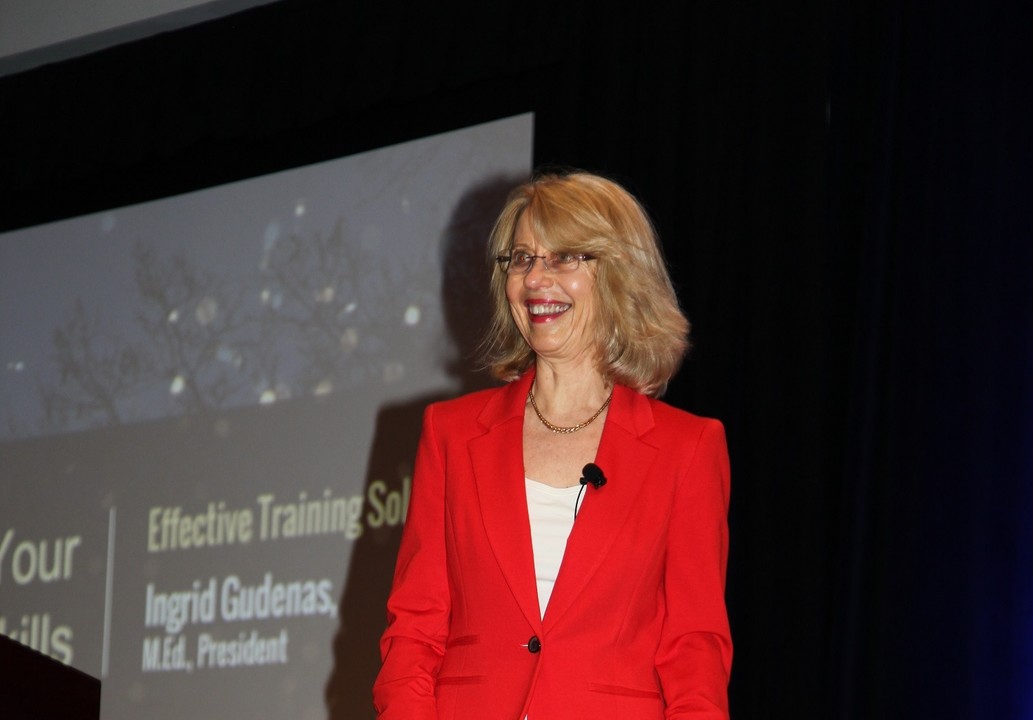
The person one wants to be

Communication - The person one wants to be

When someone asks me to critique their presentation, I spend much of my time watching the audience as I listen to them present.  I can evaluate an entire presentation simply observing the audience.  The faces in the audience, especially their eyes, as they listen, tell the truth. I can see exactly what they’re thinking.

What is supposed to happen when you’re talking to a group is there should be a mutual interchange of energy and understanding.  

What I mean is that you’re supposed to feel something powerful coming BACK to you, and this energy from the audience should be changing and evolving as you speak.

You should FEEL it. Everyone can SEE it.

If you don’t feel something coming back to you from the audience as you’re speaking, if you don’t feel them changing, they're not fully engaged.  If you can’t tell if they’re engaged or not, they are not, because an engaged audience is impossible to miss.

This back-and-forth energy and understandings between you and the group creates great spontaneity. In you, in them.  

It goes beyond anything verbal. It supersedes logic. 

Their eyes are full of expression, they’re nodding, they’re laughing, they’re leaning forward. You can feel their collective energy flowing toward you.

When you react to that positive energy right in the moment, the audience makes you laugh, inspires you, they bring out the best in you. You find yourself saying brilliant things. You’re the person you’ve always wanted to be.

The skill that enables you to do this is your ability to connect with the audience in a way that taps into the core of you.

Your ability to connect is WAY more important than the content you’re presenting.

When you do make that connection at the core, how you will feel and the response you’ll get in return will astound you, regardless of your content.

I can’t express the joy I feel when I see my students achieve this breakthrough. I just received this email from one of my students who experienced it for the first time:

“I want to write to share that I attained a new career achievement today, thanks to the workshop I took with you. I just presented to executives at a major conference in Silicon Valley. It was a gathering of serious intellectual heavyweights, including technology fellows, international policy-makers, and thought leaders from Google and Accenture. 

"It is a little silly, but I feel like a rock star walking around the conference now with so many people approaching me to meet and to start conversations. I’ve already been asked to speak at 2 more events and I just got off the podium a couple of hours ago.

“This is the person I wanted to be when I signed up for your classes, and I am forever grateful to you.”

The person you want to be is within you, patiently waiting for the day you fully tap in.

How to melt a frozen heart

Communication - Melt a frozen heart

“I don’t do affinity,” she said.

These words were spoken by a young woman in her 20's who had recently graduated college and was navigating her first job in a large corporation.  She has great career aspirations for a leadership position.

She was beautiful and well dressed, enough to turn heads. Her face was expressionless and her eyes were cold.  She signed up for the Causative Communication workshop because she wanted to learn how to get other people to do what she wants.

As I coached her through the workshop, she did the exercises well, but with this coldness. I was in the process of coaching her to increase her affinity when she looked at me dispassionately and very deliberately stated, “I don’t do affinity.”

I asked her why not? And she said her attitude towards people was very neutral.  She said, “I don’t like you and I don’t dislike you. I’m here to get the work done.”

Even without knowing her exact back story, how she came to be this way (cold and beautiful), I could clearly see she had had a complete mis-education in the subject of people.

I had no doubt that there had been an intense period of confusion in her life, in the middle of which her solution to the confusion was to shut off her feelings. Young as she was, she had now done this for so long, she had no feelings for others.

She told me she thought that having affinity involved making (or forcing) yourself to like someone you didn’t like. I explained to her that you can’t make yourself like someone.  

I told her the real secret to affinity and then I walked away. I had a lot of affinity for her when I said what I said.  And then I left it up to her.

In the next exercise I watched her from a distance. She was different. She was smiling at the person she was paired up with.  It was not a big smile, but it was genuine, it had warmth. Her partner smiled back.

Her transformation continued from there into something miraculous.

“Cold and beautiful” melted into someone warm and alive.

She opened up the circle of people she was working with (from only 1-2) and ended up working with everyone in the workshop.  She was forming great relationships rapidly and people were responding to her with great warmth. She looked happy and astonished.

I knew she had never experienced anything like this in her life. She didn’t know I was watching her.  I wiped a tear and went back to coaching others.

At the end of the workshop she looked me straight in the eye and with a great intensity of feeling said, “Thank you.”   We didn’t speak, just looked at each other and shared a long moment of intense understanding and mutual admiration.  Warmth.  Affinity.

The reason she was able to transform so quickly is because the power and knowledge was within her already. I just had to give her a friendly reminder where to look.

I just had to show her the path to being causative.

Once you show someone the right path, they always do the rest.

You can do this too. You just have to make the choice to learn.

Be the cause!

Small change, big impact

Communication - Drop

He walked into the room like an executive. His presence alone calmed everyone. He had an air of dignity. When he spoke, he only had to say it once, everyone listened.

He wasn’t an executive, far from it.  He was an individual contributor.

But the power of his communication had the impact of a leader.

If you had seen him before he took the Causative Communication® workshop, you wouldn’t have recognized him as the same person.  He was fidgety, always in a hurry, very short attention span.  He spoke fast, in short bursts and he stopped listening the moment he thought he knew what you were going to say.

He had worked at the same large corporation for over 10 years, trying to get promoted, but without creating much visibility or recognition.

A year after the class, he had been promoted to Team Lead and then had 2 more promotions in very rapid succession.  He was now viewed as a charismatic and respected leader on the fast track to senior executive.

What was it he changed?

His speed.

Before the workshop he focused on doing everything fast.  We can all understand why, because in today’s crazy world we have to do everything fast to get it all done.  So he did everything fast.  Talked fast, listened fast. That’s what he did until the workshop showed him how to slow down.

You pay a big price for fast.

The price you pay is in the form of quality and presence. Both suffer.

Now I don’t know if you try to communicate too fast, but my hunch is that you probably know.

So here is a very simple shift you can make, right now, today.

Slow down.  

This does not mean be less productive or get less things done. It means slow down to the point where you focus on the quality of your communication, the quality of what you say, how you say it and the quality of your listening.

When you slow down, you make a much stronger connection with others, that deep human connection that enables all good things to happen.  You’ll achieve greater understanding.  

The quality of your communication today shapes your tomorrow, it’s how you create the reality of your very important life.

Be the cause!

How to disagree

HowToDisagree

Many people in my workshops tell me they want to learn how to disagree. Especially with their boss, or other people that are higher up.

It’s easy.  

Just say, “I disagree.”

I’m obviously joking.  You can see learning how to disagree is not actually what they want.

What they want to learn is how to get the other person to agree with them. That’s a whole different thing.

Last week I had an extremely competent woman in my workshop.  No one does her type of work better than she does.  She was very soft-spoken and very respectful of others.  She avoided unpleasant situations and frequently held back saying which she was thinking.  In a group she was especially subdued.

She was at manager level, but despite many attempts, never moved higher in the organization. She had almost given up making it to Director.

Everyone loves her.  She was frustrated.

It was especially tough for her when she disagrees.

The difficulty most people have when they disagree, is maintaining a deep human connection and a feeling of rapport with the other person.

If you lose these 2 things in a disagreement, you’re going to fight (and lose) a battle.

These 2 are the foundation for every great conversation and every great outcome you’ll ever have.

The mistake people make is they start disagreeing when there’s no real connection between them and the other person. I see this all the time in my workshops.  They’re so focused on disagreeing, they’re not focused on staying connected.  Do that and you lose.  Period.

They think the problem is that they’re disagreeing. 

Not true.

The problem isn’t that you’re disagreeing. The problem is that you’ve lost that strong connection with the other person.  If you never had it to begin with, it’s even worse.

Without the connection, you have no power. 

I have been receiving a series of emails from this woman in my workshop saying that learning these skills has had a profound impact on her life. She’s speaking up. She disagreed with her boss and swung him to her point of view. She tells me how exhilarating it is to have these skills and how strong, how powerful she feels.  She is dancing through life.

I predict she will be a Director soon, and then not long after, she’ll be a VP.

Build that deep human connection.

Then talk about anything you want.

The power of you

Crystal ball.jpg

I have sat through thousands of corporate presentations.  On the whole they have 1 thing in common: the presenters all look alike to me.

There can be wide differences in industries, job roles, status, audiences, messages, purposes, countries of origin, age.  And HUGE differences in personalities.  Yet, even with all these individual differences, they end up looking alike.

In case this is happening to you, I want to let you know there is a way out. 

You have to start by discarding any faulty education in how to give presentations that you’ve undoubtedly received.  It’s an education that makes individuals look like the masses and makes your presentations look like they were mass produced, not creative, not unique, not showing your true power.

Most people learn how to give corporate presentations by taking workshops and observing others.  The problem is that most training on how to do public speaking or giving presentations focuses on the mechanics and doesn’t touch the core of you.

The core of you is where your power really lies.  

Not in your hand gestures, not in your slides, but deep within you.  

This is what you want to have as your true source when you speak. 

I just wrapped up a series of workshops for 10 individuals in a tightly regulated pharmaceutical industry.  The problem was that all 10 individuals came across as tightly regulated too.  Absolutely no personality was in view, nothing unique to touch the audience. Their slides were cumbersome yet it was mandated they had to cover everything in the slide.  It was difficult for presenter and audience alike.

When they tapped into their own unique core, what was released was incredible. I actually started to cry during one of their presentations, even though I’d heard that slide presented 100 times. Suddenly what he was saying became REAL and I realized the tragic debilitating effect of the illness that their pharmaceutical product was designed to alleviate.  I had involuntary tears in my eyes imagining a young teenager having to suffer without it.

The core of you is very worth finding and nurturing.  Very worth expressing.

It doesn’t matter what your content is. 

What matters is that you communicate from the core of you. 

That is where you are truly causative.

The power of your look

Look.jpg

On my morning runs I encounter a mother taking her two-year-old for a walk. He likes me to stop and simply be with him. His eyes meet mine and stay there.  Very calm, comfortable, peaceful.  As I talk to his mother, he and I continue to look at each other.  He is looking straight into my soul and I into to his.  No words are exchanged.  His name is Dakotah.

I saw him again this morning.  Same thing, except this time there’s a clear sign of recognition in his eyes, a signal he knows we’ve met before, I’m a friend.  The look in his eyes says he is happy to see me.

He never looks away, nor do I, for many minutes on end.  No words between us. The most direct communication there is. Pure harmony and understanding, being to being, his soul to my soul.  Our eyes truly the windows to our souls.  We like each other, we haven’t even spoken a word.

All little children are born this way. I’ve delivered my programs in 30 countries and have traveled the world. They all look at me like that.

No adults do.

What happens between childhood and adulthood that makes adults so uncomfortable and tense looking into each other’s eyes, especially with no words being spoken?

This is a question I ask myself every week because in our Causative Communication Live! workshop I teach adults how to regain this lost ability and I always wonder how we let ourselves get so mixed up.

By the time we’re grown, we have suffered so many injunctions about looking and not looking, confusing it with staring, getting it all mixed up with manners and politeness, that we’ve been forced out of this most NATURAL of abilities by the most confusing set of rules ever invented.

My students go through the most wild experiences as they rehabilitate their ability to be there comfortably and just LOOK at another person. They feel an anvil is going to fall from the sky and crush them if they REALLY look at someone.  They are SURE the other person is going to hate it and get irritated. 

It is exhilarating, liberating and freeing to discover there is no anvil, there’s only the pleasure of experiencing another human being.  

The power and confidence it brings when you can look someone very comfortably in the eye, unhampered by all the discomforts of the confusing rules and threats society has imprisoned your spirit with, is a source of great energy in every conversation you’ll ever have.

When you regain this ability, the way you look suddenly transforms the other person. You see this all the time when people talk to children.  They are suddenly transformed when they meet a child. They are softer, gentler, the best of them comes out.  

You can transform the other person just by the way you look at them.

All the intensive communication exercises we teach for becoming a Causative Communicator build on this one key ability. You have to be absolutely comfortable doing this as you add each new layer of skill.

At the beginning of the exercise, most people can’t even do it for 5 minutes. 

These are super successful people who are not used to struggling. So it usually comes as quite a shock.

But I make it clear that everything they want is to be found on the other side of this skill.

It's a must have.

The power to transform any situation or any person begins with your ability to assume the cause role in your communications.

And you won't be able to do that until you can stand there and emit a presence so strong it will literally TRANSFORM the other person.

Be the cause!

Gently, with powerful Intention

intention lion.jpg

In my last article I talked about the power of unwavering, yet effortless, intention. This week I want to talk about how to take even this superior level of intention to an even higher level.

Back when Noah Webster published the first American dictionary in 1828, he stated a great definition for the word intention. He said intention is:  when the mind with great earnestness fixes its view on any idea, purpose or goal, and will not be called off. 

To be in earnest is to be very determined and deliberate in stretching towards an objective. To fix is to establish immovably, without wandering. 

Will not be called off means that nothing – nothing – can divert you.

Communicating with intention means that you will not be called off, nothing can divert you from your goal of being perfectly understood.

How you do it is very, very important. It requires the foundation of your being very simple, very direct, very clear and saying what you have to say with the complete certainty you will be perfectly understood.

If you add any force or effort to this equation, it blows up. The other person reacts to your force or effort and doesn’t hear what you’re saying. They then just want to defend themselves. You are diverted from your goal.

The key to success is to be and sound effortless.

And that’s also where the word gentle comes in.

Most people think gentle equals weak. They have good reason to think this. Most people who are thought of as “gentle” don’t have powerful intention and they ARE weak.

Gentle does not mean weak. 

It means not harsh, not rough, having a light touch, considerate. 

A gentle tone of voice combined with unshakable intention is powerful. It’s a thousand times more powerful than being forceful.

The word gentle has a most interesting derivation. The word originally meant of noble birth, high social standing, aristocratic.  In other words, high class.

You can see how this is true. Someone who is harsh, severe, arrogant, forceful, rough or brash doesn’t come across as having class.

You have an unmistakable dignity when your communication combines a gentle tone with unwavering intention.

I always make “before” and “after” videos of my coaching clients. In his “before” video, confronted with a difficult situation, a VP I just coached quickly started to sound irritated because I wasn’t doing what he wanted. He became a little forceful, then more forceful, and the conversation ended up going around in circles, without any satisfaction, frustrating to both.

It takes a lot of practice and coaching to develop perfectly executed intention.  We practiced for hours, until he could deliver all his communications (regardless of topic or difficulty) gently AND with perfectly executed intention. 

In his final video, he was confronted with two extremely difficult scenarios. In both cases he delivered his communication precisely, he was very simple, direct, clear, with a warm, gentle tone of voice and unwavering intention.  He came across as high class.  He was immediately compelling.  He only had to say it once.

There are other skills that are vital for complex discussions and difficult situations.

But without intention, there is no hope. It doesn’t matter how many times you say it, how carefully you choose your words or how right you are.

With a gentle tone and powerful intention, you only have to say it once.

When you communicate with that level of quality, with that power of intention, magic happens and you are perfectly understood. And funny enough, when people perfectly understand you, they can’t help it, they start to go into agreement. It supersedes logic. You have entered the realm of magical and causative communication.

The power of effortless intention

Intention mountain.jpg

Initially, when I start to coach someone on developing intention in their communication, they develop a stern facial expression and take on a “I really mean it” tone of voice.  They become rather forceful and sometimes even a little harsh.

This is especially true if they anticipate the other person’s not listening or they’re going to “resist“.

Most people, when it’s important and they REALLY want to get their communication across, say it a little forcefully, sometimes a lot forcefully.

I coached a very successful VP this week. He is brilliant, inspired, has executive level thinking, is passionate and results driven.   He’s a good man. In difficult conversations he starts out calm, but if he got impatient or irritated, his tone became antagonistic.  Afterward he felt bad.

Most people have a lot of trouble finding that precise zone where their communication is penetrating and effective, but not harsh.

That’s because they don’t understand the true nature of intention. Communication is meaningless without intention.

Intention is defined as deliberate purpose.   Purpose is the end result you want. Deliberate means that you consciously evaluated the situation and made your decision. The word deliberate implies the outcome is completely under your control.

When you are deliberate, it’s not so much that you’ve decided what you are going to say, it’s that you have decided the outcome.

This is the opposite of feeling that the outcome is “up to them”. Deliberate means you are in complete control of the outcome.

This is the essence of being causative.

Whether you are going for increased financial compensation, more resources, cooperation, gaining a new customer, a negotiated agreement, executive leadership support, agreement on strategy, whatever you’re going for, when you have intention, true intention, you have decided and are certain about the outcome.

This decision, in and of itself, has no energy, it simply is that you have decided. And you have decided with complete certainty. Certainty means freedom from doubt. Doubt means maybe yes, maybe no, you’re not sure.  Certainty means it’s definitely this, with no doubts.

There is no “trying” involved, nor is any trying needed because the decision has been made.

There literally is no energy, effort or force involved in intention. It’s 100% done on a thought level and not at all in the field of energy.

A big mistake people make is that when they want something from the other person, their intention becomes for the other person to agree with them. When you’re communicating, this is an incorrect intention. It will frustrate you. The more you try to get someone to agree with you the more you repel them, the harder you have to work at it, and the less result you get. Trying to get others to agree with you turns people off and is fruitless.

The only correct intention in communication is to be perfectly understood, and I mean perfectly.  People who come to me for coaching find it eye-opening when they discover how imperfectly they are being understood.  They had no idea. Most people don’t fully realize how imperfect the understanding is when they’re not getting what they want. Imperfect understanding is the foundation for disagreement.

Perfect understanding is not easily achieved. It takes skill. It takes intention.

 It requires saying what you have to say very directly, very simply, very clearly and, most importantly, with a complete certainty that you will be perfectly understood. When you communicate with that quality and that power of intention, magic happens and you are perfectly understood. And funny enough, when people perfectly understand you, they can’t help it, they start to go into agreement.

This is inside of everyone. It's inside of you.

Gravitas

Gravitas.jpg

Angela reports directly to the CEO of a large organization and has global responsibility for thousands of people. She interacts directly with the entire leadership team.  It's a high intensity position.  The leadership team is composed of strong, stubborn, driven personalities.

She came for 1-on-1 coaching. Her goal was to develop gravitas and increase her ability to persuade and influence at the leadership team level. 

Gravitas is often expected in a VP or Senior VP position.

The problem most people have developing gravitas is a confusion about what it is and no sense of how to get there.

In the dictionary gravitas is defined as a serious, solemn, dignified manner.  

Serious is defined as sincere and earnest, solemn, no laughing.  Solemn is defined as not cheerful or smiling.  Dignified is defined as elevated self-respect, a feeling of being worthy.

Dignity sounds great, but gravitas sounds rather stern and grim. This is going to be rather difficult for people to sustain.

What if it doesn't match their personality?  Which in Angela’s case it didn't.

In other words, there's a lot of confusion around this word, imprecise definitions, confusion about what it is.  

Having said that, I understand what she was looking for and how to get there. I’ve helped many people develop what others would call gravitas. 

There are 4 key elements

Note – you can’t fake any of these. They’re skills that you have to develop by doing the hard work it takes to make them real.

The first is being there comfortably.  Most people who come to my workshops or for coaching are agitated. They're a little bit stressed, a little bit anxious. This strips you of any dignity. It strips you of gravitas. You have to be in the moment, calm and comfortable. When you are, it makes you dignified, makes everyone around you relax, get calm and take you more seriously.  Anxiety is a dignity-killer. It's hard to take someone who is anxious seriously because they don't create the impression they're in control.

Second you need to make a deep, strong connection with the other person. If you don't have that connection, that rapport, your words just bounce off.  When you have that connection your words penetrate and create a completely different effect. Clients tell me all the time, “I said the exact same words, but this time they listened.”

Third, you need to communicate with intention. Most people have never been coached on intention and they substitute effort, force and energy. All these strip you of gravitas.  Intention has everything to do with certainty and nothing to do with being forceful. What you see when someone has executive presence, when you see a powerful leader, is not in intensity of energy, it's an intensity of intention. The energy is incidental. Many very powerful leaders speak softly but with unmistakable intention. When you speak with intention, it gives you great dignity.

Fourth is your affinity.  Many people think that in order to have gravitas you have to assume a demeanor that is almost cold.  This will only work to make everyone cold toward you.  That’s not what you want. The warmer you are, the warmer they will be toward you and the more they will trust you.  Affinity is how much you like them.  It must be genuine. It's not something you project.  It's something you feel and it must be real.  Many people feel they can't afford to have affinity because they won't be taken seriously. The problem is never too much affinity. The problem, if there is one, is insufficient intention. Both affinity and intention have to be high.

It is magical that when you put these all together, you have what people call gravitas, you have respect, you have credibility. When you speak, people listen.

I haven't covered building a relationship, listening and other components that are vital to complete the picture and pull the whole thing off, those are for another blog.

My Lead Trainer coached Angela on these points, one at a time, using our unique coaching methodology. When Angela saw her final video, she cried. This is not a woman who cries easily.  

What she saw in the video: Her eyes were sparkling, she was completely comfortable, completely in the moment, dignified, worthy, she made a strong powerful connection, she wasn't forceful but her intention was penetrating, she was loaded with warmth and affinity and she was compelling. You would have followed her in a heartbeat. She was beautiful and powerful.  

She said, “I had no idea I could ever look like that.”  

We cried too.

This is inside of everyone. It's inside of you.

It's not how you look, it's how you feel

stage.jpg

One of the first things I do when I'm teaching people how to master causative communication to groups, is videotaping everyone's presentations. So they get to see themselves on video right off the bat.

The most common reaction is that people hate their first video. They hate how they look. They're very self-critical.  They desperately want to change how they look up there.

It's not how you look, it's how you feel.  Most people have this backwards.

What you're feeling is communicated telepathically to your audience.  Human beings are incredibly telepathic and need no words to pick up exactly how you're feeling. It's the most influential aspect of your talk, it monitors everything:  how open they'll be to your message, how much they get out of what you're saying, how much attention and respect they pay you, how argumentative or critical they are and, most important, whether they buy in.

What you're feeling is way more powerful than how you look, your words, or your hand gestures.

I recently worked with a senior director who had taken another training program where, in an attempt to give him what they thought was executive presence, they taught him how to walk back and forth across the stage and do "big hand gestures". The problem was, he didn't feel comfortable or natural, so it looked artificial.  He sadly looked like someone trying to impress. You weren't drawn in.

There was a high-level woman, one of the best dressed women I've ever worked with, perfect hair, gorgeous.  She was extremely self-conscious and there was no warmth coming from her, so you admired her appearance but she didn't pull you in.

Both of them were posturing for the audience.  Not effective.

There was a high-level talent development/training director who wanted to come across as passionate so she could get executive buy-in for her department’s strategy.  She was feeling rather desperate. Her attempt at “passion” caused her to come across as trying too hard.  No buy-in.

I had a brilliant PhD design engineer who created absolutely dazzling slides.  Even though he was presenting hard data that was cutting edge and incontrovertible, he was scared to death. He came across as a terrified adolescent.

I also had a guy in sales who strode around the room, trying to look like he was connecting with everyone, inserting what he believed were dramatic pauses throughout his talk.  He was trying to look good, but he was feeling too eager to make the "close". He came across like he was selling, did not inspire trust.

None of them felt what you need to feel to communicate powerfully when you're talking to a group. 

First of all, they weren't enjoying it and enjoyment is vital. If you were talking to someone who isn’t really, really enjoying talking to you (perhaps only pretending to enjoy it), how much are you going to really enjoy it?  The same principle applies to communicating to a group.

I've had some people say, “But I enjoy it a lot! I love being in front of an audience and performing.”

Performing or trying to be interesting is about as effective as any showing off (which is all it really is).  When people get the feeling you're showing off, they get the feeling it's all about (and for) you, it doesn't touch them.

I'm talking about making a deep connection with each person in the room (or on the call if you’re virtual) and actually in the moment experiencing the rich emotional enjoyment of connecting with each one of them.

It's NOT an intellectual activity it's a feeling.  

It's a feeling of deep rapport with the audience.

You also need to feel relaxed, comfortable, confident and totally certain.  This slows you down considerably, enables you to think on your feet, really tune in to your audience and respond to their subtle non-verbal cues as you speak, thereby creating tremendous rapport.

The combination of these makes you look amazing.   

But the second you start thinking about how you look, you have too much attention on yourself and not enough on your audience.

Once you are up there, you have to FORGET how you look and create a feeling.  This feeling communicates powerfully to your audience and they start feeling it with you. 

I’ve coached thousands of individuals, including the ones above, and seen the amazing happen with each one, seen their full potential emerge, when they get this right. Each one of the individuals above is now someone you would love to go hear, regardless of what they're talking about, someone you just can't get enough of because of the feeling they create whenever they speak.

They don't worry about how they look. They simply get the feeling right, theirs and the audience's.

How to warm up an audience

Ingrid.jpg

All audiences look disinterested at the beginning, unless you're Oprah, of course. 

I remember my first audience. I’d made the decision to be a professional corporate trainer, but as I was standing in front of my first group, looking at 20 skeptical, disinterested faces, I suddenly had no idea why I wanted to do this, and the thought occurred to me that I would be much happier if I just turned around and left now.

Well, that first time I was stuck. While I seriously thought about leaving, my feet didn't move and I started talking.

That was over 30 years ago and since that time I've learned that, unless the audience already knows and loves you, that's how ALL audiences look at the beginning. I often have cold audiences who don't know who I am and they look exactly like the very first one.

Many of my clients tell me their audiences are even worse, because they come in and immediately start multitasking.

So, how do you break through and reach the audience who looks like this, how do you get them warm?

By making a deep personal connection with each person. 

Focusing in on them as individuals, not as a group (this is very important). By putting your full attention on them individually and giving it your ALL when you talk to them.

I've had people ask, how can you possibly do that with an audience of 300? Here's how. You connect with each person briefly, so you have enough time to connect with all of them individually.  

This reminds me of an audience I had of 200 trial attorneys. The CEO of a very upscale, prestigious law firm hired me to speak to them about communication. Sounded good to me so I said yes.

When I got in front of them there was a wave of ill will coming from the group that just about knocked me over. Suddenly it occurred to me that this is a group who thinks they already know everything about communication and are only here because the CEO mandated it. I slowly realized that as trial attorneys, they were supremely skilled at silent antagonism when their opponent is talking. I was the opponent.

It was a wave of, “We want to see you fail” like I had never experienced.

As they introduced me, and I was eyeing the sea of hostility I was about to enter, again it occurred to me that I would rather be anywhere else. Alas, too late.

When I tried to connect with them as individuals, they repelled me with their eyes.

How do you penetrate a barrier like that?

I refused to be distracted by the hostility. I focused on the person BEHIND the hostility. 

As I was speaking, I put my attention on each person in the audience, penetrated the hostility with understanding, understood each one, one at a time, and delivered the full force of me and my message.

Many people think that during a presentation, understanding is 1-way. In other words the speaker presents, and the audience understands. This violates the natural laws of communication.

Excellent communication is predicated on 2-way understanding. 

While many people can do this 1-on-1, most people don't know how to tune in to others when there is a GROUP of them to tune into. But it's important and those who have charisma have mastered it.

So, as I was speaking, I was simultaneously understanding each person, one at a time, giving each individual the full force of my understanding. What they experienced was someone talking to them who fully understood them and WASN'T making them wrong for it. That's rare.

Let me explain what I mean by giving the full force of me and my message.  I don't at all mean that I was forceful, because I am very, very rarely forceful.

What I mean is not holding myself back, using both intention and vitality, combined with strong affinity and understanding to deliver my message fully.

Most people don't put enough of themselves into their communication to create an impact. Unfortunately, those who give their all often don't know how to ALSO make a personal connection with the audience, and so they speak passionately, but their message bounces off the surface, doesn't penetrate. The audience remains an audience of spectators, not an audience in rapport.

It takes both: a strong, deep personal connection with each person in the audience plus how you deliver the message .

It took about 5 minutes for the attorneys to fully warm up. I thought that was pretty good. It was a 2-hour talk, so we had plenty of time for the good stuff. And, when they warmed up, they REALLY warmed up. Turned into a wonderfully rowdy crowd and we had a great time.

Afterward, the CEO told me the evaluations were very good with a number of complaints. The complaints were that the session was too short and they wish they'd had more time. Considering they bill by the hour and the total billing rate in that room for 2 hours exceeds my imagination, I took that as high praise.

So, don't be at all dismayed when you first look out at your audience and see polite disinterest and feel that barrier or wall. Unless your rock band is currently playing on the radio or you’re speaking at your family reunion, that's how most audiences look. Even for CEO's.

But it doesn't matter how they look at the beginning. What matters is how QUICKLY you can turn it around and get them warm and with you.

The key points I've mentioned above always work, you can count on that. 

When new management rocks the boat

boat.jpg

When I talk about a LACK of communication skill, people often think I'm talking about people who are terrible communicators. It's NOT what I mean at all.  Most people who come here for workshops are already successful and very good communicators.

What I'm talking about are the skills to create change. Changing the other persons mind, changing the other person's attitude, changing their decisions, changing the outcome, changing their operating basis, changing how long it takes them to go into action, changing how much you get paid, changing how they listen to you, changing their level of respect, changing WHATEVER it is to match your concept of the ideal.  I’m talking about creating ALL the change you want. 

When people don't have the skills to change something, it always seems like it’s impossible and can't be handled. Often this isn't true because when they come here for training, they discover exactly what they need to do to turn that situation completely around and, after they leave here, they do so successfully.

Let me give you an example.  See what you would do in this situation.

One of my clients, Eve (not her real name), is working for a wonderful company that has great people, a fabulous product, and a gorgeous mission statement.  About a year ago, through a merger and acquisition, they were taken over by a group many in the organization referred to as “evil snakes”.

This new senior leadership team disrupted the entire organization. They got rid of, and demoted, the wrong people, including Eve’s wonderful boss.  They put their own inexperienced people in place. They didn't listen. They were arrogant. They proposed things that were ludicrous.  They criticized everything that was good. They were condescending.

A number of good people left. You can understand why.

Eve didn't.

She's not in a position of power, but she took it upon herself to transform the situation, not just for herself, but for everyone.

Her goal was to bring the new management group and the existing organization into collaborative harmony, and to educate the new management in all that was good so they’d appreciate and support, rather than destroy, it.

While most in her organization viewed the new group as villains, she learned not to villainize. 

She learned there are no borders for outstanding communication, that really GREAT communication reaches beyond all limits. 

She communicated freely to everyone, high and low in the organization.  A little bit here, a little bit there, always communicating, gently showing and guiding them to the road to success.

She saw wins from the very beginning. Small ones at first, then larger and larger. Until there was a complete transformation.  In only 90 days.

The new group is no longer arrogant. They listen and defer to the experienced members of the organization with respect and admiration. The last email I got from her she said they were working together as a "family”, they have trust and she added, “It’s authentic trust.”

She did not have the power, nor the position, officially to do this, she didn't have the authority, she didn't have permission, she didn’t initially even have anyone on her side, she didn't have anything except her own desire and her communication skills. She had to manage both sides of the fence.

I personally know what she’s done to develop these amazing communication skills. She worked hard to develop them, and even harder to strengthen them to the point where they stand up in a hurricane.  

When the hurricane hit, she was ready.

She communicated, listened, educated, enlightened, changed minds, got them talking to each other and created breakthroughs. 

She now has the trust of everyone in the organization, including the C-suite, even though she’s not at that level.

She is simply universally recognized as possessing a value that has no borders and no limits.  A value so high, she’s been invited to attend the most sensitive discussions at board meetings.  She has responsibilities and scope in her job role now that are extraordinary considering the position she started from.

Best yet, it's a great company again, everyone gets along, there's respect and harmony. They’re collaboratively accomplishing new goals, new missions. It's a great place to work again.

One person made that happen for everyone.  All it takes is one. You.

That's what I mean by communication skill.

The word skill means a great ability to do. The more difficult the situation, the more skill it takes to turn it around. The more skill you use, the quicker the turnaround. When you have a full range of skills, the turnaround can happen almost overnight. The more skills you use, the wider your impact on the world.

I have been teaching this subject for 30 years and I have certainty there is no limit to our, to your, communication skills.  

As well I know, once you have these skills solidly, you can feel free to imagine the impossible.

As Eve told me, “If you don’t communicate well enough that you can choose what happens to you, then the organization chooses for you.” Who wants that?  Yuk!

Communication skills set you free and put your destiny back in your own hands.

The secret metric of a really great presentation

iStock-863542218.jpg

After you're done speaking, count the number of seconds before someone says something. The more impactful you are, the longer it will take.

If they speak the very second you finish, that means they weren't really with you, they were waiting for you to finish, their minds were already on what they were going to say next.

If it takes them 5 to 20 seconds before they speak, it means what you said had a profound impact and they’re absorbed in it.  It's taking them a little time to gather their thoughts.  

This is high praise for you.

The longer it takes, the more impactful your presentation. I've seen it take up to 5 minutes. And the audience still didn't know what to say. They were so moved.

What do you have to do to create this effect?

Many people think it has to do with WHAT you're talking about. It really doesn't.  I don’t know how many thousands of presentations I’ve seen over my decades as a presentation coach.  I’ve seen presentations on just about every topic you can imagine, most of them corporate.

I've had people tell me, This is a boring topic or This is an exciting topic.

There's really no such thing. I've seen seemingly boring topics made riveting and I've seen exciting topics made dull.

I've seen immovable audiences greatly moved. 

It has nothing to do with your status, your experience, or your topic. 

It has very little to do with what you say. 

It’s all purely about you.

It has to do with your ability to make a deep human connection with the people listening to you and to deliver your communication with great clarity and intention.

I had a student who worked in a semiconductor factory who gave new employee orientation training sessions.  In his “before” video, which was only 2 minutes long, he bored the audience out of their minds.

At the end of the workshop he gave the same presentation for his final video.  It was on fire extinguishers.  When he was done, the audience couldn't speak, and when they did, they asked me could he continue and tell them more?  Everyone was sorry it was over.

What he was talking about didn't change. How he connected with the audience and how he delivered it did.

He wasn’t more passionate. He was more connected. 

Big difference.

It has more to do with your heart than your mind.

One of my clients recently sent me a video of one of their senior leaders giving a talk at an industry conference for my feedback. Watching it, I saw a senior leader who did not stand out from the crowd. He looks like every other corporate senior leader giving a presentation. Interesting for the first couple minutes, then time for the mind to wander. This is what I saw:

  • He comes across as totally sincere and very brilliant, but weak

  • He has tremendous untapped charisma that doesn’t emerge during his talk – you can tell it’s there within him, but it doesn’t come out

  • He’d benefit greatly by learning how to make a deep connection with the audience vs how he is now, coming across disengaged – once he makes this deep connection, the audience will be totally blown away by him

  • He communicates very powerful ideas, but they bounce off rather than impinge – his message doesn’t penetrate as profoundly as it should

In point of fact, his presentation wasn’t nearly as interesting as the one on fire extinguishers. 

This senior leader, like so many others, has tremendous potential to win the hearts and minds of his audience once he learns this most basic of lessons:

  • You have to make a deep human connection. You’ll never do that with WHAT you say. It’s not about how passionate you are. It has to do with your ability to penetrate all the artificial barriers inherent in corporate presentations and to connect to other human beings.

Connect means to unite. 

People spend WAY too much time practicing WHAT to say. They don't spend any time practicing how to make a deep human connection.

But once you master that, you can talk about anything.

And when you're done, you'll count many seconds of silence, each of which is more potent than applause. 

Try it. Experience the magic you’re capable of creating.

Presenting vs Communicating

iStock-666909418.jpg

There’s one thing guaranteed to make you nervous if you do it.  It’s one of the first and biggest mistakes most people giving corporate presentations make.  And that is thinking that there IS such a thing as “a presentation” and that “a presentation” is somehow different from communication. 

The reason this is a mistake is because it causes you to go into presentation mode which makes you feel completely unnatural. Now, feeling completely unnatural, you try to talk. Yikes! Now you really do look and sound unnatural!

It’s one thing to put your slides in presentation mode. It’s a completely different thing for YOU to be in presentation mode. 

It will work for your slides. It won’t work for you. It starts you off completely on the wrong footing. 

If you listen to how most people sound when they’re giving a presentation, you’ll hear they sound completely different than when they’re just talking conversationally. They sound like they’re broadcasting. 

Anyone who is in “presentation mode” will talk at the audience and no audience likes to be talked at.  That’s a BIG reason why audiences tune out.

Additionally, when you think about what you're doing as “a presentation,” it’s easy to start feeling like you’ve got to perform. 

This creates all kinds of problems because when people think of performing, they start worrying about being judged. 

This makes them very nervous. It creates anxiety over, “I hope I do well up there” and “What will they think of me?” and “I need to WOW! them.”

How do you correct this mistake? By viewing what you’re doing as communicating. 

Keep this in mind whether your audience is 3 or 3,000. It's easy when you're 1-on-1. The skill is to keep doing it as your audience grows.

A performance is judged. A communication is understood.

Great communication creates great understandings. Your job is to cause great understandings.

You don’t want to perfect your “presentation skills”. You want to perfect your communication skills.  This will help you feel natural which is, obviously, very, very important. It will also make you effective, which is even more important.

Decide what you absolutely want them to fully understand. And then communicate it, don’t present it. And keep communicating until they thoroughly understand. You’ll see your impact grow.

Self-esteem, self-respect & self-confidence

Lion.jpg

Self-esteem can be simply defined as having a very good opinion about yourself. 

It comes from within.  No amount of technique or gimmick can put it there.

Self-confidence is knowing you’re right, knowing you can do it, belief in your ability, in your power, in yourself.

Self-esteem is bigger than self-confidence. It’s a high feeling of worth.

But it’s not arrogance which is an offensive display of superiority of one’s self-importance at the expense of others, exhibiting an attitude and actions that demonstrate contempt of others.

Self-respect is honoring your ideas, beliefs, decisions, values, the products of your life, and treating them as important, even sacred. Protecting them and keeping them inviolate, free from violations. 

I can look at someone and see how much self-esteem they have because it radiates in their presence.

Self-esteem drives out fear. 

It also has a big impact on others when they see you have it.  I’ve heard people call it an “aura”.

It creates a definite unmistakable chemistry in all your relationships when you have it. 

It feels good.

People hate to lose it. Certain situations make it tough to maintain.

It’s especially difficult for people to feel a lot of self-esteem when they’re in front of a camera, being videoed making a presentation. They usually hate watching themselves the first time when we play it back. Why is that? Why are they so disappointed in what they see?

Because they’re not demonstrating competence at a level that would make them proud of themselves.

Which brings us to an important point. 

Competence is what raises self-esteem. 

It’s the fastest and most secure way I know how. 

Competence is a range of capacity or ability sufficient to meet the demands of the situation. It includes competent force, competent knowledge, competent skill. 

Demonstrated competence is a direct route to self-esteem.

That’s why I love teaching, helping others increase their competence, seeing their competence grow, followed by the prize of greater self-esteem.

As I write this, I was thinking about an email I received from our Lead Trainer, Janet, about 3 recent students in a presentation skills workshop. This is what she wrote:

"First of all, I’d like to tell you about Mary.  She was funny but extremely self-conscious, nervous and almost hectic. It took her a lot of effort to not have her mind racing all over the place and just be there comfortably. We coached her intensively to take all her attention off herself and to become very aware of, and connected with, her audience. She ducked her head while watching her final video, like she couldn't watch it, and I was concerned.  When I went over to inquire, she was crying. I was even more concerned. She looked up and told me they were tears of joy. She never had believed she could look so professional and relaxed.

"Next, our student named Mike. He is a big gruff guy, an engineer and manager. He presents frequently, mostly virtual. In his first video, he grimly told us to think of him as “Mr. No” because that’s his main answer when people ask him for something.  As we progressed through the training, he relaxed and learned how to make a deep personal connection. He told us that he had crippling stage fright that had ruined his personal life. His dad was a world-class magician. Mike wanted to follow in his footsteps and although he acquired the skills, stage fright had stopped him cold. He thought he would have it for the rest of his life and switched his career to engineering. He was truly blown away and grateful for the coaching that enabled him, for the first time in his life, to handle stage fright. He made a great final video. He warmly shook our hands and said that he found the class “truly transformative”.

"And finally, Aisha. She is a shy data analyst, in her 30's, new to her role in the cybersecurity industry. While brilliant mathematically, she is very insecure and self-conscious. She had many bad interviews and failures before landing this job. In her final video, she was confident and poised, and was literally GLOWING as she watched it. She felt like a whole career path had opened up for her. She could now think of herself as a leader, a goal she had never dared dreamed. She described the class as “life-changing”.

Experiencing and hearing about all the students transformed during these classes is one of my greatest pleasures in life. 

Rock solid self-esteem sits on a foundation of competence. Take every opportunity you can to demonstrate your own competence and watch your self-esteem grow.  I’d love to hear about it.

The eyes tell it all

0.jpg

Body language is created by how you feel, your emotions. If you try to control your body language, or voice tone by themselves, and if they don’t match how you really feel, you’ll look forced, you won't come across as authentic. 

What is in your eyes is THE most important “body language” you have.  Your eyes communicate your innermost feelings. It's all about the way you look at the other person or, if you're talking to a group, how you look at your audience. 

You can think about how the way another person looks at you makes you feel, how important it is, not just THAT they look at you, but HOW they look at you.

If you're not feeling confidence, you're not going to look at anyone with confidence.  If you try to fake it, it will look like you're straining. If you're really afraid, you'll have a hard time looking at anyone at all.

The rest of your body language is incidental to what is in your eyes.

Many people have said they've been told that when their arms are crossed, they look “defensive”.  But I've seen plenty of people with their arms crossed, who have a warm look in their eyes, their eyes telling me they're clearly interested, open and paying attention, they don't look defensive at all. The arms are incidental.

In short, the eyes have it. As one of our ETS coaches says,

It’s amazing how much the eyes communicate when they are actually meant for seeing.

One of the biggest things that’s going to influence what’s in your eyes is whether your attention is on yourself, or what you’re going to say, or whether your attention is FULLY on the other person.

Self-consciousness literally means too much attention on self.

Too much attention on yourself, on what you’re saying or on the outcome you want, messes with your eyes.

I just delivered a workshop on presentation skills where a big issue for participants was learning the art of NOT thinking and talking at the same time, not planning what to say next, but gaining the ability to put all their attention on their audience and deliver the full impact of their communication directly.

Many people think you have to know your material, and what you're going to say, extremely well before you're able to do this, but it's not true.  It's a matter of practice, and even people who know their material very well need to practice keeping their attention on the audience.

Having a strong intention to communicate drives out self-consciousness and this can be seen in your eyes.

The affinity you genuinely feel (or don’t feel) for the other person or persons also shows in your eyes.

When you have your attention fully off yourself, and you have a strong intention to communicate, and you have genuine affinity for your audience, your eyes will captivate and the rest of your body language will fall into place. This is true whether you’re talking 1-to-1 or 1-to-many.

In the workshop I just finished last week, there was a gentleman who learned to take his attention off of planning what to say next and put it squarely on the audience.  As he did so, his hand gestures became powerful and brilliant. I never coached him on his hand gestures and he didn’t even notice them until I pointed out how great they had become.  I coached him on what was going on inside him, and when this was all straight, his hands knew exactly what to do.  As he spoke with strong intention and great affinity for the audience, they said he came across as a Commander.

A very powerful woman was in the workshop.  Powerful until she got up to speak.  She was constantly focused on what to say next and her eyes were flitting around.  However, when she learned how to put her focus on the audience, her eyes really connected with the individuals, her full power came out in a blaze of glory. She now touches your mind and also your heart.

I also had a very polished speaker in the workshop, one who has won many awards for a variety of communications. His presentation was very interesting and in the beginning he was more interested in it than he was in the audience. As he shifted his focus from what he was saying to the people he was talking to, he went from “interesting” to absolutely riveting.

One participant was very nervous and really couldn't look at the audience at all.  When she tuned into the audience, and really experienced them, her eyes lit up with enjoyment. The audience called her delightful.

Authentic goes both ways.  

For sure you want to be authentic with the other person, but the first person you want to be authentic with is you.

That is why you want to tap into that source of confidence within you, your intention, and your natural affinity for people. Tap into it and FEEL it.  Then you are authentic to yourself and you will be authentic to the rest of the world too. 

Your eyes will captivate.

If you need any extra help with this, feel free to email me with any questions you have. I’m more than happy to help you captivate your audiences.

Causative [kaw’-zuh-tiv], adjective:  Making what you want HAPPEN.  Being able to cause your intended effect or outcome at will. 

If you're serious about your goals, our workshops and coaching will give you the tools and skills to achieve them.

We know they work because we’re swimming in client success stories.  They got the promotion, conflict evaporated, the other person changed completely, their vision is spreading throughout the organization, they closed the $400 million deal, they are enthralling audiences, receiving standing ovations and their teenager’s talking to them. 

Most people live their entire lives with this power lying dormant inside of them.  You don’t have to be one of them.

The power to transform any situation or any person begins with your ability to assume the cause role in your communications. 

 Be the cause!

Nothing changes a person faster

0.jpg

Nothing changes a person faster than the way you listen to them.

One of my clients, Carl, has a coworker, Marty, who is loud, stubborn, arrogant, and acts like he's always right, unfortunately even when he's not. He also says, “No” when you ask him for anything.

Marty has managed to alienate just about everyone. When he starts to talk, people run for the door.  If there's no escape possible, they endure it, but it's painful. 

No one has managed to get Marty to listen to them. Every point they make triggers a counter-point that easily turns into an argument if they respond to it.

The problem is that Marty is good at what he does. He's influential and can't be ignored. People like Carl rely on him for resources and cooperation.  Marty's been there a long time, he’s very knowledgeable about what he does, just utterly unwilling to listen to anyone else (because he knows how wrong they are). 

Based on what Carl told me, I knew that Marty lacked even basic communication skills and was unable to receive any incoming communication. 

I also could tell no one was listening to Marty. They “knew” what he was saying was inaccurate and so they would shut him out, they couldn't help but resist hearing him out.

They didn't realize they were doing the same thing to Marty that he was doing that annoyed them.

This isn't unusual. There's a lot of pretended listening that goes on. People shape their facial expressions to look like they’re listening, but inside there’s a lot of internal activity going on and they’re not REALLY listening (or hearing).

The key to real listening is to not think at all while you're listening, to focus all of your attention on simply receiving and understanding what the other person is saying.  Pure understanding with nothing else added.

Easy to do if they’re a nice person or you’re interested in what they have to say. Much harder if you disagree or they push your buttons.

Last week, as part of a workshop, I coached Carl on listening. He developed this skill (and it IS a skill) to the point where his ability to really listen could stand up in a hurricane. To the point where he had no urge to interrupt, he was fully attentive, he was strongly interested, and he had high affinity for the other person regardless of what they were talking about or how negatively they were communicating.

This was a whole new way to for Carl to listen. It wasn’t easy to develop this skill, but after practicing, he really had it.

The first time Carl sat down to listen to Marty, it took a long time. Marty talked for 40 minutes straight. He was arrogant, opinionated, pointing out everything he thought was wrong with Carl and his department. 

Most people would not have made it to the 60-second mark, with just pure listening and understanding, without any thinking, straining, or judging.

Carl listened intently and perfectly for the full 40 minutes until Marty looked very satisfied he had said everything. Carl made really sure Marty was completely satisfied he had said everything that was on his mind. 

Then Carl gave him a very thorough acknowledgment, letting Marty know he fully understood what Marty had said, that he really understood Marty's point of view, where Marty was coming from.  Carl demonstrated his understanding with an amazingly good, extensive acknowledgement. This was not a validation, it was an acknowledgement.

Carl didn't indicate that he agreed with Marty, just that he fully understood.

Marty looked a little surprised but extremely pleased. And then, for the first time ever, he asked Carl what his thoughts were. 

They they had their first good conversation.

Carl continued to do this (listen & acknowledge Marty) over the course of 2 days. Marty's monologues became shorter and shorter and shorter. They also became less critical and accusative, they became more positive. Best yet, Marty became more and more interested in what Carl had to say. 

It was all very natural, organic. It just flowed.

The situation went from being a painfully negative monologue by Marty which was always followed by Marty's rejecting everything Carl said, to a real 2-way conversation, a real dialogue, back-and-forth.  Complete understanding on both sides.

In 2 days the relationship completely changed.

Not only that, but Marty changed the way he relates to everyone. He’s now pleasant, and interested in what others think. Everyone is noticing and commenting. 

Marty still has very strong opinions, but now it's possible to discuss them with him rather than debate or argue.  The struggle is gone. Projects are moving forward. Marty's resources are being allocated more effectively. Marty even agreed to make a project schedule more aggressive, even though it meant he would sacrifice some of his best people to it.

This was all last week. On Monday, Marty sent Carl an email thanking him and telling him their conversations have been “excellent” and he greatly appreciates them. What that says to me is that Marty spent the weekend reflecting on it. Somehow he must've noticed his whole life changed.

This is the power of real listening. I’ve coached this skill for over 30 years and truly the first time someone practices real listening in one of my workshops, it’s difficult for them to get to the 60-second mark before they crack.  It’s a skill to be able to listen and maintain it as long as needed. A skill that pays off big time.

Many people call the skills I teach magic, and I quite have to agree.

You had me before hello

microphone.jpg

We've all heard the expression, “You had me at hello.”  I firmly believe, when it comes to presentations, that's way too late.  The really great presenters have you even before they say hello.

You see them standing there, before they even say anything you can see there's something quite different about them.  Even before they start, you're intrigued, captivated, leaning forward a little to hear what they’ll say.

It’s their poise, dignity, their self-assuredness, their calm, their focus, it’s the intensity of their presence. 

There are two VPs in a presentation skills workshop that’s running here right now.  Our Lead Trainer, Janet, is leading the session.  I just sat in at the beginning to watch everyone’s first videos.

If you hadn’t told me that either of these two was a VP, I never would have known.  Reason is neither one had executive presence, neither of them communicated with the poise, dignity and elegance you’d expect from a VP level. 

One is a new VP, so you could say that's understandable in their case.  The other has been a VP for a couple years.

In both cases, the material they were presenting, the content, was very interesting.  But the way they presented it wouldn’t have captured you.  You’d be tuning out and only semi-listening pretty quickly.  The audience, trying to pay attention, was fighting a losing battle. 

Both of them sounded very “Corporate” and correct.  They were articulate, but their words weren’t landing or making a difference.  

And that's really the point, isn't it?  When we listen to a presentation, we want what we hear to make a difference, to matter.

I left after their first videos, had meetings all day and went back in at the very end of the afternoon to see their second videos.  Wow!

It’s not what they’re doing.  It’s how they’re being, their presence.  There’s an invisible chemistry.  There’s an aura.  It creates an atmosphere.  It creates a mood.  It creates an expectation, an anticipation.  A promise of something great to come. 

That's how these two VP’s were at the end of the 1st day.  Very changed. 

They had developed presence. Presence strong enough to notice even before they spoke.   Just the way they walked, stood, looked over the audience. 

They each had that unmistakable aura of an executive, the poise, the dignity of a powerful individual who knows what they have to say is important, a comfortable leader, in absolutely no rush, taking their sweet time, self-assured, creating with their presence a promise of a great outcome.

Then, even before they started to speak, the way they looked out into the audience, they made a powerful connection with everyone in the room. Connection made before they ever said a word. 

As they spoke, the connection intensified.  I could swear the audience stopped breathing at a couple of points.

I could feel the audience’s disappointment when their talks were over. They wanted to hear more, but it was gone. You can only imagine the reception they’ll get when they come back to speak again.

It was the same content they’d presented in their first video.  Almost the same words.  Completely different presence.  Completely different connection with the audience.  Completely different result.

Important point – this doesn’t just apply to VP’s.  It’s even more powerful at lower levels.  People really notice.

This really is how to make what you want happen. Have the powerful presence of someone others are eager to know, make a powerful connection with the audience, make them keen to hear your next words, create a never-ending fascination with your message.  Know that it’s not what you say.  It’s how you say it.

Well, that was the end of the first day of training.  I'm looking forward to seeing them at the end of the second.

Wishing you great success with all your communications!

Why Only Genuine Connections Work

iStock-517252897.jpg

Every amazing outcome is built on the foundation of a deep, profound and calming human connection.  Despite what you’ve been told, you can build this connection in a matter of minutes if you know how, whether it’s one-on-one, in a meeting or when you’re in front of a group.

I’ve studied so many books and videos on persuasion, influence, leadership, power, all about how to get other people to do what you want.   And I always ask myself, “Would I want the other person to know I'm using a technique on them?  What would they think if they knew what I'm doing came out of this book?”

Techniques, for me, take the honesty out of the relationship, and then I don't feel like I'm there with all of my integrity.  So I refuse to teach “techniques”.

I believe only genuine connections work.  The true source of powerful communication is trust, affinity, and above all, it's willingness. When you have the other person's full willingness, there's nothing they won't do for you. 

Inside each person is an incredible source of generosity. Most communications aren't good enough to tap into it. True communication does.

There’s this philosophical aspect to it, and then there’s the science behind “how to make it happen”.

Last week I delivered an intensive 3-day coaching workshop on Causative Communication. As occasionally happens, all the participants were men.  No particular reason for this, it's random who registers for our open enrollment sessions.

One of the first things we cover in the workshop is how vital making a deep human connection is if you want to have meaningful communication. This strong connection on a personal level transforms ALL conversations, whether they’re intensely difficult negotiations or personal.

We paired the guys up to do the exercise immediately following this lecture and discussion. The exercise is intended to give them the practice and coaching needed to make this skill real, so they learn how to make a strong connection with anyone, and make it happen immediately. 

All the guys in the workshop were already successful in life.  I’m going to tell you about 2 of them.  They're both extremely competent men. One is in sales and closed a $100 million deal during lunch on the 2nd day. The other is a senior director slated for VP who directly influences 150 locations around the world in an $18 billion corporation. 

As they were doing the exercise, something neither of them expected happened.  First with one and then the other, their eyes filled with tears.  I always have a box of Kleenex in the room because this wasn't the first time.

Although it happened in the first 2 minutes of the exercise, it seemed to happen slowly.  I was watching their faces and noticed their eyes were slowly welling up and then overflowed.

The senior director said, “I've talk to people my whole life, but I've never actually connected with them, not like this.  I just realized how much emotion I have inside me.  I just realized how much affinity I have.  I’ve been pushing it all down.”

He looked at the man he was paired with and said, “You were a complete stranger when I walked in this morning and now I love you.” 

The way he said it was as natural and normal as saying, “I’m glad you’re on the team.” 

What they both were feeling was a deep personal connection.  This kind of connection, unfortunately, is not common today.  I personally want it to be, which is why I teach how to create it.

The amazing thing about this connection is that it's made without words, it's BEYOND words, it's a level of being able to reach people that's way beyond words.  It has nothing to do with what you say.

All the guys learned how to make this powerful connection within the first minutes of a conversation.  They learned this by lunch on the first day.  Then they learned how to use the connection as a launching pad for powerful, meaningful communication.

The guys had so much fun the first evening of the workshop.  After they left for the day, they made strong connections with all the people they encountered.  They amazed and happily stunned everyone they talked to, including business meetings and a variety of people they’d only met for the first time.

The outcomes of their all conversations were extraordinary, including getting “this never, ever happened before incredibly good” results and cooperation in discussions with their boss. 

We celebrated their outcomes the morning of the 2nd day.  They were exhilarated.  Each success sparked a good bit of laughter and spontaneous applause.

Does everyone who comes to this workshop cry?  No.  But they’re all deeply moved, deeply touched by the difference having this beautiful connection makes in ALL their interactions, especially in the big important conversations where the outcomes really matter.

The ability to make this connection is a skill, it’s an ability, it’s not a personality trait, any personality type can learn it. 

It’s so worth making that connection before talking about anything.  Everything just goes so much better.

I know from my own life and from working with thousands of clients, I know outstanding communication gives you a life of ecstasy, exhilaration, joy, a life that is thrilling.   Most people would not call their day-to-day life thrilling.  But it can be.   Making that connection is a big part of that.

I am dedicated to empowering others. 

If you’re interested in learning more about how to create that kind of connection, I invite you to a webinar I’ll deliver next week on how to make what you want happen.  It starts with making a deep human connection and I’ll be covering how to do that. 

Wishing you many meaningful connections in all your upcoming conversations!

The Root Cause of the Fear of Public Speaking

Untitled design.jpg

When I say it was the worst case of stage fright in the world, I’m not kidding.  I’m describing myself.  I was terrified when I first started public speaking.   I don't want you to think it was a normal kind of fear, it wasn't.  The most strange thing would happen. 

I would feel totally confident until I started walking to the room where I would speak.  Then an absolutely paralyzing fear would come out of nowhere and take over my entire body. It was an unthinking reaction, completely out of my control.

Back when I started, we wore silk blouses and business suits.  When you sweat in silk, it makes a big, dark mark on the silk.   I could never take my suit jacket off because my sweat made that dark, ugly mark from my arm pit all the way down to my waist.  I kid you not. 

You had to seriously wonder why on earth I wanted to become a public speaker because the amount of stress I experienced was almost beyond endurance.

You might be thinking it went away after the first 5 minutes of speaking.  I wish it were so.  It took about 30 excruciating minutes. 

That kind of fear is totally obvious to an audience.  Trust me, I know. The look of sympathy on their faces was piercingly painful.

30 minutes into my talk, it would go away and I was fine, charming, charismatic (okay, at least that's what they told me).

The evaluations at the end of my talks were not pretty.  I remember in my entire first year of public speaking, the nicest one I ever received was from someone who wrote, “I am sure that someday Ingrid will be a good trainer.”  I wish I could find that person today and thank them for being so nice.

I got a lot of advice from people. The advice fell into two camps.  Half the people told me that if I just kept doing it I would get over my fear.  The other half said it's not something you ever get over. You have to learn to live with it. 

I had one person tell me that you will always have butterflies in your stomach; the trick is to get them to fly in formation.

Well, mine were certainly NOT butterflies.  They were more like World War II bombers and, whether or not they flew in formation, they were dropping bombs right and left.  There was no chance they would turn into butterflies.

It's amazing I persisted. This stage fright lasted for the first 5 years of my career.  I studied everything about stage fright I could get my hands on, read every book, had mentors, studied great speakers, rehearsed in front of a mirror, practiced until I dropped, tried every tip stopping short of medication.

For 5 years there was no change to speak of.  Some days and with certain groups it was microscopically better than others, but overall, it was paralyzing.

People were shocked to see it because I sounded confident before the presentation and then they saw how different I was once the stage fright landed. 

I was determined to learn how to handle it.  I was determined to be causative.

I kept thinking there must be an answer. And I was determined to find it.  What was happening was so IRRATIONAL that I just couldn’t accept that I had to deal with it, live with it, endure it forever.

So I kept looking.

It paid off.  I found the root cause.

This turned out to be important.  All the tips I’d gotten never addressed the root cause.

There are THOUSANDS of tips published online on how to deal with the symptoms, none of them even mention a root cause.  And none of them worked for me.  When you Google, “how to handle stage fright”, you’ll find many strange suggestions, even from places like Stanford and Harvard. I saw a video posted by Stanford where the woman recommends wiggling your toes.  She's got to be kidding!  Wiggling my toes would've made me feel completely stupid.  The Harvard video demonstrated “power poses”.  They made me look ridiculous. 

I’m not putting these educational institutions down - there just isn’t much good wisdom out there when it comes to handling this anxiety.

If you have stage fright, probably what you’ve been taught about it isn't true. If it were, you wouldn't have it.

What I discovered as the root cause was that I was resisting the audience, not allowing myself to fully experience them.  I couldn't even face them comfortably. It was really simple.

I actually couldn’t perceive the audience, meaning literally I didn’t see them, they were gray shapes, not individual people with faces. I was so caught up with what was going on in my mind, I couldn't focus on them. 

My entire experience up there was MENTAL.  It had nothing to do with the real world, with the audience in front of me.  In short, I was not experiencing them.

I was so loaded with RESISTANCE it paralyzed me.

When I found the root cause, what to DO about it became obvious.  I realized it was a SKILL SET to stop resisting, be comfortable in front of the audience, face them with ease, not feel judged, get my attention off myself, be fully in the moment and not anticipate their reactions or the outcome, to not be thrown off by the status or importance of the individuals in my audience, to perceive each person with clarity, to fully EXPERIENCE my audience and connect with EACH individual in the audience with complete ease.

I created a series of practice repetitions to master each skill and then mastered them one at a time.  It was not overwhelming because I practiced one skill at a time.

I did these exercises and suddenly the stage fright was gone, ALL the stage fright was gone.  I was able to come out, completely at ease and relaxed, and make an immediate connection with the audience, I was able to make my presentation really good from the first, “Hello."

Soon after, I was asked to speak to a group of 500 CEOs.  Normally I would have been sweating down to my ankles. I couldn't believe it. I walked out front, I was completely calm. I was even laughing about something that had just happened in the group. I made a very relaxed and spontaneous comment about it and then everyone was laughing too. We were completely connected.  Right off the bat.  I felt like a miracle had happened.

I discovered the people who said I had to live with some degree of fright my whole life were, to put it baldly, wrong. You don't have to live with it. You can make ALL of it permanently gone.

I also trained myself, very systematically, in all the other skills that would make me a great speaker.

Now I’m in demand as a speaker and my evaluations are outstanding. 

People don't believe me when I tell them I had no natural ability for public speaking.  They think I'm making it up.  Personally I'm happy they don’t believe it, and even happier that videos of my early talks don't exist because they truly were more awful than I’m even portraying here.

Whether anyone believes it or not, it's the truth.  I had no natural abilities when it came to public speaking. 

Actually, that's not correct. Just like everyone else, I was loaded with natural abilities, but they were buried so deep inside of me, it took an archaeological expedition to get them out.

Once I conquered stage fright, as I saw others present and experience a similar anxiety, I thought they could really benefit from what I learned.

There's an incredible advantage I have PRECISELY because I started truly terrible at something and then learned how to become really good at it.  It’s made me a GREAT teacher.

The reason is, I know EXACTLY what it's like to not excel at public speaking when you very badly want to.  I know what it’s like to be terrified.  I am easily in my students’ shoes, looking at the world through their eyes, seeing what they see, feeling what they feel. 

And I know painstakingly well EACH of the steps, mastered little by little, one at a time, that are needed to learn how to become a polished expert at presenting to groups.  I know each of the exact skills you need to master and in what sequence. 

So, I started to teach it and have done so for 30 years.

I used what I discovered about the root cause of stage fright, plus the exercises I did to make it vanish, plus the exercises I did to master all the skills you need to be great, to form the core of a 2-day workshop I love to deliver.

This particular workshop gives me inexpressible joy every single time I teach it.  Over the years I learned how to take everything that took me well over 5 years to learn and hone it so I can teach it in 2 days and have EVERY student create an incredible transformation in the way they present.

When I started teaching presentation skills, I discovered that just about EVERYBODY has some degree of stage fright.  We all try to hide it, but it is astounding to me how prevalent it is.

Not everyone has it as severely as I did, but many people do. I taught one woman who was seriously trying not to throw up before her presentations.  I've had a number who take medication for it and don't want to.  I've had many who are paralyzed by it, and an equal number who simply feel tense, not at ease or relaxed.  I had one CEO who started not sleeping well the week before a big presentation, and I’ve taught many people who don't sleep well the night before.   I’ve worked with a number of the world’s foremost experts in their field who are terrified when they have to communicate their knowledge in public.

Even Michael Bay, the famous Hollywood high budget, high action film director!  His 1.5 minute stage fright experience has been viewed by over a million people on YouTube:   Michael Bay Stage Fright at Consumer Electronics Show

It’s CRAZY! How many people have it and how bad it can be. 

Many people do my workshop specifically because they have dreadful stage fright.  I'm ridiculously delighted to work with them because I know the relief they're going to experience in the workshop and especially after when they get in front of an audience and experience being FREE of it.

I tell them they will get over their stage fright by lunch on the first day. They never believe me of course, until it happens.

The reason we tackle stage fright so quickly in the workshop is because I need them COMPLETELY comfortable and relaxed before I start teaching all of the other skills that will make them powerful presenters.

Just to give you an example, here is one of thousands of emails I’ve received from students:

“Five years ago I spoke to an audience. Suffering from a horrible bout of stage fright, I lost my place mid-speech. Flustered and scrambling, the audience had to clap me offstage.  I was so disappointed with myself.  I had practiced and practiced – what went wrong?

“Last week I made my first presentation since that embarrassing event.  I presented to an in-room audience of 150 of my peers, and a global televised audience of 250+. I was a success!  I received comments that I was a “natural”, congratulatory emails from across the country, requests to be a mentor, and a huge accolade from my manager!

“Thanks to your Transformative Presentation Skills workshop, I feel comfortable and excited about presenting now. The sky is the limit!”

Now I've trained thousands of people, many of them have won major speaker awards at conferences, some even have an international fan club.  All of them are powerful and amazing, even if they’re only presenting to small groups of engineers.

Because I learned the skills the hard way, I know how to make it easy for you.  So I can't even begin to tell you how thrilled I am that I can teach something that helps so many people.  It’s a joy to teach.

And I’m so proud that my staff do just as good a job as I do when they’re teaching it.  I'm always blown away seeing their work.  So are their students.  It really is a teachable skill.

The most common comment we get at the end of the workshop is, “I can't believe the transformation in me and everyone else in just two days.”

I hope my own experience helps you with your own stage fright.  I WISH I could make your stage fright vanish!  I wish I could do justice teaching you how to make it evaporate in this blog.  I’ve never learned how to write about it so someone can learn how to make it go away completely.  I’d love to be able to do that.  Right now, it's something you need to be in person with me to learn fully.

I teach it in a workshop format because I need to have you in person for 2 days to do the exercises and we need to have an audience in front of you.  That way I can really truly demonstrate each of the principles and skills to you.  You can practice the new skills with an audience in front of you and I can coach you to make sure you're doing it right.  As you do the exercises, you EXPERIENCE the stage fright vanishing and you see exactly what you’re doing to make it go away.  You also see exactly what you need to do to prevent it from coming back.  You gain control.

Handling stage fright is just the BEGINNING of a beautiful journey to becoming an incredible public speaker, where you totally connect with your audience, where it’s so good, you can’t stop grinning.

Master the root cause and skill set above and there’s no limit to the impact and influence you’ll enjoy.