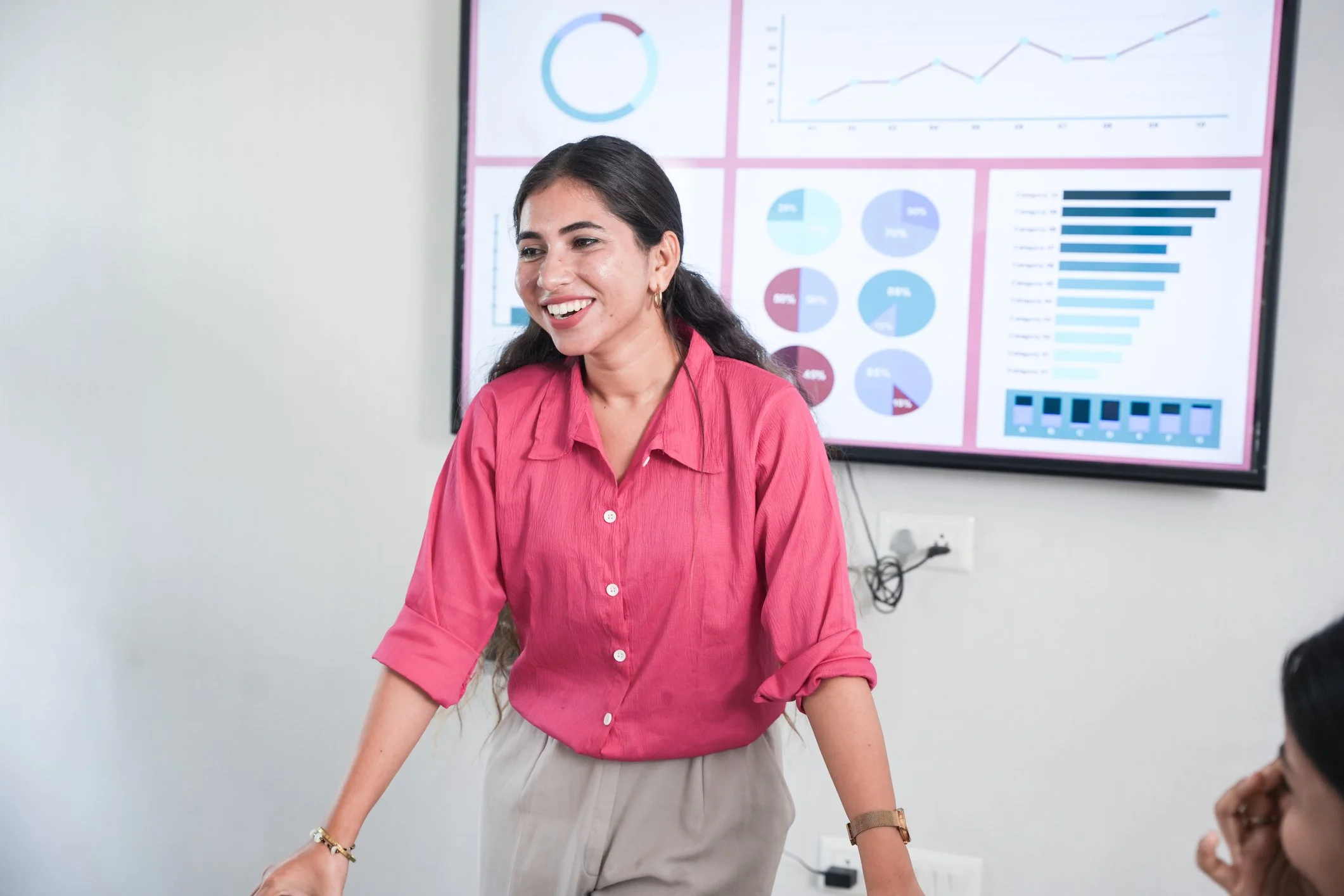
Asha: “Are you nervous?”
I could tell Asha was.
Me: “No.”
Asha: “You’re kidding! Look at them! They look mean!”
We were standing to the side, observing the audience I was about to address. Asha was right. They did not look friendly. People we’d never met, and they did not look eager to hear from us. Asha, a new ETS Trainer, was accompanying me to a presentation I was about to deliver. The stakes were high. If it was successful, our program would scale globally. If they were doubtful or negative, it would come to a halt.
Looking at their faces, it didn’t look promising.
Asha looked at me in shock. She could see my quiet confidence.
Asha: “How can you not be nervous?”
Me: “Because I know how it turns out.”
Most people begin presentations unsure how the audience will react. It’s the not-knowing that undermines self-confidence. They look for the first response to regain their footing. And when the reaction isn’t what they expected, confidence drops again.
Prediction vanquishes fear, even when the starting point looks dismal. You’re not needing. You’re not guessing. You’re not hoping or wishing. You’re able to predict. With certainty.
Prediction becomes possible when you have the communication skills to shape the outcome.
Early in my career, in my 20s, I had already figured out that communication shapes outcomes. I asked myself, How much of this skill do I need to create reliable, repeatable results?
The answer was simple.
A lot.
I was willing to do the work. I hated feeling nervous. I didn’t like being at the mercy of an outcome I couldn’t control.
Each new communication ability I developed rewarded me with exceptional results. So, as I looked at this group, I was already envisioning where I would take them.
I walked in front of them and said, “Hello.”
Five minutes later, they were engaged and leaning in. They had gone from indifference to interest. Their understanding built from there and ended in commitment. They were happy, and they didn’t leave when it was over. The questions that followed all pointed in the same direction: How do we implement this?
Months later, I was there again. This time, while Asha was delivering her first training session. We looked out at the audience. They looked disinterested. Asha was terrified.
I told her what all-star athletes are taught: “Ignore what you’re feeling and do what you’ve been trained to do.”
Asha’s training kicked in. Shoulders back. Chin up. She connected with one person in the audience and smiled.
They loved her. Truly loved her.
Asha was exhilarated, beyond blown away.
Now, years later, Asha is fearless. I was watching her teach a new ETS Trainer.
New ETS Trainer: “Aren’t you nervous? That audience looks like they don’t want to be here.”
Asha smiled.
“No. Not at all. I know how it turns out.”
Skill like this doesn’t come from insight alone. It’s built deliberately by doing the work. And when you do, something fundamental changes. You stop relying on hope, personality, or effort. You trust what you’ve developed in yourself. That’s when your words begin to carry weight and the outcomes you care about start to happen naturally.
Skills aren’t about polish. They’re about freedom. Freedom from not knowing what’s going to happen, hoping, and being at the mercy of the room.
They’re not magic. They’re earned.
The reward isn’t ego. It’s reliability and trust.
Be the cause!