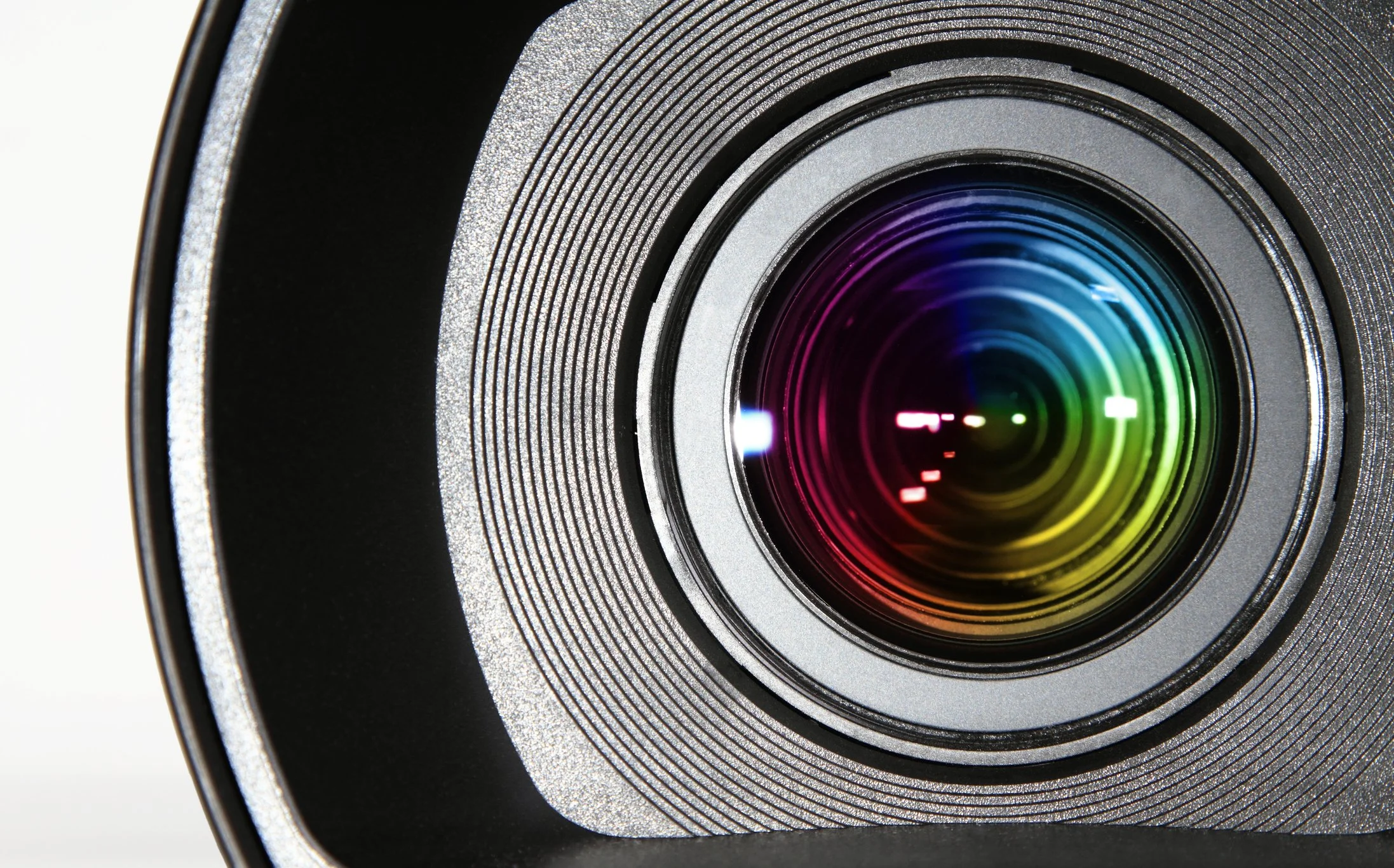
Jake, the executive I was coaching, was looking at the camera like it was a snake. He had come for coaching for what’s called “Direct to camera” presentation skills.
Many executives are coming here for this coaching because so many are being asked to make Direct to Camera videos. They’re being asked to sit in a small room and talk to a camera, with no actual audience present, to create a solo video that will be watched by 200 or 10,000 people. Many of these videos will be posted online for the public to see. I recently coached an executive who posted a video to 5,000,000 views.
It’s a weird feeling to talk directly to the camera. It’s not a “natural” skill.
I have seen even the most charismatic executives completely freeze up when facing the camera. These presentations are usually their worst. And the execs are usually so relieved when it is over, you can see the look of relief wash over them when they’re done!
When I watch their “Before” videos, or I see the ones online, they all look so stiff to me. Totally unnatural. Have you seen any of these executive videos? Do they look stiff to you?
The reason they’re stiff is because talking to a camera feels weird. It feels weird because it IS weird. Talking directly to a camera messes with your instincts. You are waiting for reactions that never come. Everything in you expects a human response and all you get is dead silence.
You’re asked to connect with, engage, inspire a large group of imaginary people while staring at one piece of glass. That disconnect is real. You’re focusing directly on a camera and you are supposed to be talking to a lot of people at once, but you can’t see any of them, you can’t see any of their faces, just a cold lens. When it’s Direct to Camera, it’s a BIG cold lens.
You don’t show up as yourself because the conditions don’t allow it. Talking straight into a camera pulls you out of your natural way of being. You end up acting, even if you’re trying not to. You become conscious of yourself in a way you never are with real people. You’re speaking, but you’re not fully present as yourself. The conditions are simply unnatural.
Human presence changes who we are. Remove it, and something essential goes offline.
Executives come to me for coaching because no matter how good they are as communicators, the camera brings them to their knees. The worst part for them is not only the extreme discomfort they’re feeling, but that their discomfort is visible to the world. There’s nowhere to hide, thousands of people are looking, judging.
It’s a huge relief to them to learn how to do it and go back to being totally comfortable and totally themselves. They’re just missing the real “how”. I make it easy for them with structured exercises that gradually get them there without overwhelming them.
You don’t “get used to” talking to a camera. You learn how to create a relationship with it.
Here’s the thing to know if you are ever Direct to Camera. Your relationship with the camera IS your relationship with your audience. There is no separation between the two.
The camera isn’t a barrier to your audience. It IS the audience. Your relationship with it becomes what the audience experiences. In the beginning, people invariably look at the camera like it’s a snake. They don’t realize they’re doing that. What each person in your audience experiences when you do that is, “You’re looking at me as if I were a snake”.
An outstanding connection with your audience requires an outstanding relationship with the camera, nothing less carries through.
The quality of your relationship with the camera sets the ceiling on the quality of your relationship with your audience.
When I started coaching Jake, he was stiff. Guarded. Like he was wearing something that didn’t fit. You could sense the effort. He sounded corporate. He HATED the camera.
I did a series of exercises with him and something unlocked. Jake settled into himself. He learned to love the camera as if it were a real person.
Jake’s voice warmed. His face came alive. He wasn’t trying to perform or impress. He was simply there, fully present. Talking to you as himself and creating a great relationship with you.
It carried through in his following videos. He had a quiet pull people couldn’t look away from. Not because Jake changed who he was, but because he finally stopped hiding it. It was easy to stay with him. Easy to trust him.
And the audience changed too. They stopped watching Jake and started loving him in a very real, human way. They felt the distance between them and him melt, and they started believing him. He was talking about their future, and it felt real. People felt lifted. Energized. They weren’t distant spectators anymore. They were inspired.
When you’re yourself, people don’t have to work to believe you. They can see you.
It’s just two human beings meeting, multiplied across thousands of screens. And that feeling of being fully yourself and genuinely met is something your audience is always yearning for.
It feels human. And that’s what changes everything.
Be the cause!