Presentations

How to warm up an audience

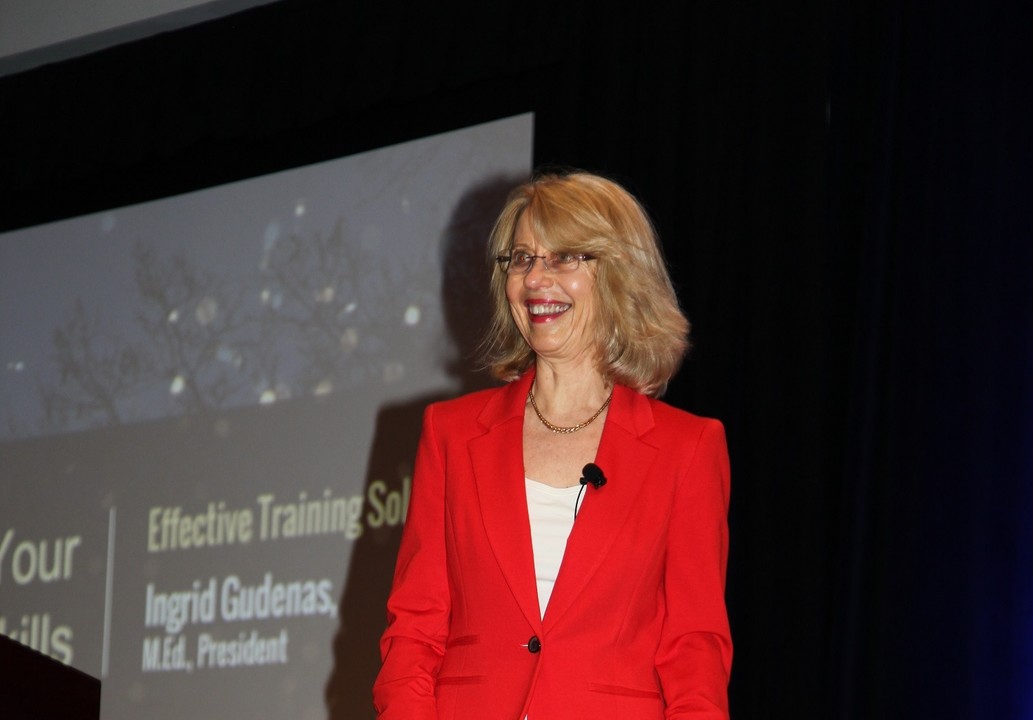
Ingrid.jpg

All audiences look disinterested at the beginning, unless you're Oprah, of course. 

I remember my first audience. I’d made the decision to be a professional corporate trainer, but as I was standing in front of my first group, looking at 20 skeptical, disinterested faces, I suddenly had no idea why I wanted to do this, and the thought occurred to me that I would be much happier if I just turned around and left now.

Well, that first time I was stuck. While I seriously thought about leaving, my feet didn't move and I started talking.

That was over 30 years ago and since that time I've learned that, unless the audience already knows and loves you, that's how ALL audiences look at the beginning. I often have cold audiences who don't know who I am and they look exactly like the very first one.

Many of my clients tell me their audiences are even worse, because they come in and immediately start multitasking.

So, how do you break through and reach the audience who looks like this, how do you get them warm?

By making a deep personal connection with each person. 

Focusing in on them as individuals, not as a group (this is very important). By putting your full attention on them individually and giving it your ALL when you talk to them.

I've had people ask, how can you possibly do that with an audience of 300? Here's how. You connect with each person briefly, so you have enough time to connect with all of them individually.  

This reminds me of an audience I had of 200 trial attorneys. The CEO of a very upscale, prestigious law firm hired me to speak to them about communication. Sounded good to me so I said yes.

When I got in front of them there was a wave of ill will coming from the group that just about knocked me over. Suddenly it occurred to me that this is a group who thinks they already know everything about communication and are only here because the CEO mandated it. I slowly realized that as trial attorneys, they were supremely skilled at silent antagonism when their opponent is talking. I was the opponent.

It was a wave of, “We want to see you fail” like I had never experienced.

As they introduced me, and I was eyeing the sea of hostility I was about to enter, again it occurred to me that I would rather be anywhere else. Alas, too late.

When I tried to connect with them as individuals, they repelled me with their eyes.

How do you penetrate a barrier like that?

I refused to be distracted by the hostility. I focused on the person BEHIND the hostility. 

As I was speaking, I put my attention on each person in the audience, penetrated the hostility with understanding, understood each one, one at a time, and delivered the full force of me and my message.

Many people think that during a presentation, understanding is 1-way. In other words the speaker presents, and the audience understands. This violates the natural laws of communication.

Excellent communication is predicated on 2-way understanding. 

While many people can do this 1-on-1, most people don't know how to tune in to others when there is a GROUP of them to tune into. But it's important and those who have charisma have mastered it.

So, as I was speaking, I was simultaneously understanding each person, one at a time, giving each individual the full force of my understanding. What they experienced was someone talking to them who fully understood them and WASN'T making them wrong for it. That's rare.

Let me explain what I mean by giving the full force of me and my message.  I don't at all mean that I was forceful, because I am very, very rarely forceful.

What I mean is not holding myself back, using both intention and vitality, combined with strong affinity and understanding to deliver my message fully.

Most people don't put enough of themselves into their communication to create an impact. Unfortunately, those who give their all often don't know how to ALSO make a personal connection with the audience, and so they speak passionately, but their message bounces off the surface, doesn't penetrate. The audience remains an audience of spectators, not an audience in rapport.

It takes both: a strong, deep personal connection with each person in the audience plus how you deliver the message .

It took about 5 minutes for the attorneys to fully warm up. I thought that was pretty good. It was a 2-hour talk, so we had plenty of time for the good stuff. And, when they warmed up, they REALLY warmed up. Turned into a wonderfully rowdy crowd and we had a great time.

Afterward, the CEO told me the evaluations were very good with a number of complaints. The complaints were that the session was too short and they wish they'd had more time. Considering they bill by the hour and the total billing rate in that room for 2 hours exceeds my imagination, I took that as high praise.

So, don't be at all dismayed when you first look out at your audience and see polite disinterest and feel that barrier or wall. Unless your rock band is currently playing on the radio or you’re speaking at your family reunion, that's how most audiences look. Even for CEO's.

But it doesn't matter how they look at the beginning. What matters is how QUICKLY you can turn it around and get them warm and with you.

The key points I've mentioned above always work, you can count on that. 

The secret metric of a really great presentation

iStock-863542218.jpg

After you're done speaking, count the number of seconds before someone says something. The more impactful you are, the longer it will take.

If they speak the very second you finish, that means they weren't really with you, they were waiting for you to finish, their minds were already on what they were going to say next.

If it takes them 5 to 20 seconds before they speak, it means what you said had a profound impact and they’re absorbed in it.  It's taking them a little time to gather their thoughts.  

This is high praise for you.

The longer it takes, the more impactful your presentation. I've seen it take up to 5 minutes. And the audience still didn't know what to say. They were so moved.

What do you have to do to create this effect?

Many people think it has to do with WHAT you're talking about. It really doesn't.  I don’t know how many thousands of presentations I’ve seen over my decades as a presentation coach.  I’ve seen presentations on just about every topic you can imagine, most of them corporate.

I've had people tell me, This is a boring topic or This is an exciting topic.

There's really no such thing. I've seen seemingly boring topics made riveting and I've seen exciting topics made dull.

I've seen immovable audiences greatly moved. 

It has nothing to do with your status, your experience, or your topic. 

It has very little to do with what you say. 

It’s all purely about you.

It has to do with your ability to make a deep human connection with the people listening to you and to deliver your communication with great clarity and intention.

I had a student who worked in a semiconductor factory who gave new employee orientation training sessions.  In his “before” video, which was only 2 minutes long, he bored the audience out of their minds.

At the end of the workshop he gave the same presentation for his final video.  It was on fire extinguishers.  When he was done, the audience couldn't speak, and when they did, they asked me could he continue and tell them more?  Everyone was sorry it was over.

What he was talking about didn't change. How he connected with the audience and how he delivered it did.

He wasn’t more passionate. He was more connected

Big difference.

It has more to do with your heart than your mind.

One of my clients recently sent me a video of one of their senior leaders giving a talk at an industry conference for my feedback. Watching it, I saw a senior leader who did not stand out from the crowd. He looks like every other corporate senior leader giving a presentation. Interesting for the first couple minutes, then time for the mind to wander. This is what I saw:

  • He comes across as totally sincere and very brilliant, but weak

  • He has tremendous untapped charisma that doesn’t emerge during his talk – you can tell it’s there within him, but it doesn’t come out

  • He’d benefit greatly by learning how to make a deep connection with the audience vs how he is now, coming across disengaged – once he makes this deep connection, the audience will be totally blown away by him

  • He communicates very powerful ideas, but they bounce off rather than impinge – his message doesn’t penetrate as profoundly as it should

In point of fact, his presentation wasn’t nearly as interesting as the one on fire extinguishers. 

This senior leader, like so many others, has tremendous potential to win the hearts and minds of his audience once he learns this most basic of lessons:

  • You have to make a deep human connection. You’ll never do that with WHAT you say. It’s not about how passionate you are. It has to do with your ability to penetrate all the artificial barriers inherent in corporate presentations and to connect to other human beings.

Connect means to unite

People spend WAY too much time practicing WHAT to say. They don't spend any time practicing how to make a deep human connection.

But once you master that, you can talk about anything.

And when you're done, you'll count many seconds of silence, each of which is more potent than applause. 

Try it. Experience the magic you’re capable of creating.

Presenting vs Communicating

iStock-666909418.jpg

There’s one thing guaranteed to make you nervous if you do it.  It’s one of the first and biggest mistakes most people giving corporate presentations make.  And that is thinking that there IS such a thing as “a presentation” and that “a presentation” is somehow different from communication

The reason this is a mistake is because it causes you to go into presentation mode which makes you feel completely unnatural. Now, feeling completely unnatural, you try to talk. Yikes! Now you really do look and sound unnatural!

It’s one thing to put your slides in presentation mode. It’s a completely different thing for YOU to be in presentation mode. 

It will work for your slides. It won’t work for you. It starts you off completely on the wrong footing. 

If you listen to how most people sound when they’re giving a presentation, you’ll hear they sound completely different than when they’re just talking conversationally. They sound like they’re broadcasting

Anyone who is in “presentation mode” will talk at the audience and no audience likes to be talked atThat’s a BIG reason why audiences tune out.

Additionally, when you think about what you're doing as “a presentation,” it’s easy to start feeling like you’ve got to perform

This creates all kinds of problems because when people think of performing, they start worrying about being judged

This makes them very nervous. It creates anxiety over, “I hope I do well up there” and “What will they think of me?” and “I need to WOW! them.”

How do you correct this mistake? By viewing what you’re doing as communicating. 

Keep this in mind whether your audience is 3 or 3,000. It's easy when you're 1-on-1. The skill is to keep doing it as your audience grows.

A performance is judged. A communication is understood.

Great communication creates great understandings. Your job is to cause great understandings.

You don’t want to perfect your “presentation skills”. You want to perfect your communication skills.  This will help you feel natural which is, obviously, very, very important. It will also make you effective, which is even more important.

Decide what you absolutely want them to fully understand. And then communicate it, don’t present it. And keep communicating until they thoroughly understand. You’ll see your impact grow.

You had me before hello

microphone.jpg

We've all heard the expression, “You had me at hello.”  I firmly believe, when it comes to presentations, that's way too late.  The really great presenters have you even before they say hello.

You see them standing there, before they even say anything you can see there's something quite different about them.  Even before they start, you're intrigued, captivated, leaning forward a little to hear what they’ll say.

It’s their poise, dignity, their self-assuredness, their calm, their focus, it’s the intensity of their presence. 

There are two VPs in a presentation skills workshop that’s running here right now.  Our Lead Trainer, Janet, is leading the session.  I just sat in at the beginning to watch everyone’s first videos.

If you hadn’t told me that either of these two was a VP, I never would have known.  Reason is neither one had executive presence, neither of them communicated with the poise, dignity and elegance you’d expect from a VP level. 

One is a new VP, so you could say that's understandable in their case.  The other has been a VP for a couple years.

In both cases, the material they were presenting, the content, was very interesting.  But the way they presented it wouldn’t have captured you.  You’d be tuning out and only semi-listening pretty quickly.  The audience, trying to pay attention, was fighting a losing battle. 

Both of them sounded very “Corporate” and correct.  They were articulate, but their words weren’t landing or making a difference.  

And that's really the point, isn't it?  When we listen to a presentation, we want what we hear to make a difference, to matter.

I left after their first videos, had meetings all day and went back in at the very end of the afternoon to see their second videos.  Wow!

It’s not what they’re doing.  It’s how they’re being, their presence.  There’s an invisible chemistry.  There’s an aura.  It creates an atmosphere.  It creates a mood.  It creates an expectation, an anticipation.  A promise of something great to come. 

That's how these two VP’s were at the end of the 1st day.  Very changed. 

They had developed presence. Presence strong enough to notice even before they spoke.   Just the way they walked, stood, looked over the audience. 

They each had that unmistakable aura of an executive, the poise, the dignity of a powerful individual who knows what they have to say is important, a comfortable leader, in absolutely no rush, taking their sweet time, self-assured, creating with their presence a promise of a great outcome.

Then, even before they started to speak, the way they looked out into the audience, they made a powerful connection with everyone in the room. Connection made before they ever said a word. 

As they spoke, the connection intensified.  I could swear the audience stopped breathing at a couple of points.

I could feel the audience’s disappointment when their talks were over. They wanted to hear more, but it was gone. You can only imagine the reception they’ll get when they come back to speak again.

It was the same content they’d presented in their first video.  Almost the same words.  Completely different presence.  Completely different connection with the audience.  Completely different result.

Important point – this doesn’t just apply to VP’s.  It’s even more powerful at lower levels.  People really notice.

This really is how to make what you want happen. Have the powerful presence of someone others are eager to know, make a powerful connection with the audience, make them keen to hear your next words, create a never-ending fascination with your message.  Know that it’s not what you say.  It’s how you say it.

Well, that was the end of the first day of training.  I'm looking forward to seeing them at the end of the second.

Wishing you great success with all your communications!

The Root Cause of the Fear of Public Speaking

Untitled design.jpg

When I say it was the worst case of stage fright in the world, I’m not kidding.  I’m describing myself.  I was terrified when I first started public speaking.   I don't want you to think it was a normal kind of fear, it wasn't.  The most strange thing would happen. 

I would feel totally confident until I started walking to the room where I would speak.  Then an absolutely paralyzing fear would come out of nowhere and take over my entire body. It was an unthinking reaction, completely out of my control.

Back when I started, we wore silk blouses and business suits.  When you sweat in silk, it makes a big, dark mark on the silk.   I could never take my suit jacket off because my sweat made that dark, ugly mark from my arm pit all the way down to my waist.  I kid you not. 

You had to seriously wonder why on earth I wanted to become a public speaker because the amount of stress I experienced was almost beyond endurance.

You might be thinking it went away after the first 5 minutes of speaking.  I wish it were so.  It took about 30 excruciating minutes. 

That kind of fear is totally obvious to an audience.  Trust me, I know. The look of sympathy on their faces was piercingly painful.

30 minutes into my talk, it would go away and I was fine, charming, charismatic (okay, at least that's what they told me).

The evaluations at the end of my talks were not pretty.  I remember in my entire first year of public speaking, the nicest one I ever received was from someone who wrote, “I am sure that someday Ingrid will be a good trainer.”  I wish I could find that person today and thank them for being so nice.

I got a lot of advice from people. The advice fell into two camps.  Half the people told me that if I just kept doing it I would get over my fear.  The other half said it's not something you ever get over. You have to learn to live with it. 

I had one person tell me that you will always have butterflies in your stomach; the trick is to get them to fly in formation.

Well, mine were certainly NOT butterflies.  They were more like World War II bombers and, whether or not they flew in formation, they were dropping bombs right and left.  There was no chance they would turn into butterflies.

It's amazing I persisted. This stage fright lasted for the first 5 years of my career.  I studied everything about stage fright I could get my hands on, read every book, had mentors, studied great speakers, rehearsed in front of a mirror, practiced until I dropped, tried every tip stopping short of medication.

For 5 years there was no change to speak of.  Some days and with certain groups it was microscopically better than others, but overall, it was paralyzing.

People were shocked to see it because I sounded confident before the presentation and then they saw how different I was once the stage fright landed. 

I was determined to learn how to handle it.  I was determined to be causative.

I kept thinking there must be an answer. And I was determined to find it.  What was happening was so IRRATIONAL that I just couldn’t accept that I had to deal with it, live with it, endure it forever.

So I kept looking.

It paid off.  I found the root cause.

This turned out to be important.  All the tips I’d gotten never addressed the root cause.

There are THOUSANDS of tips published online on how to deal with the symptoms, none of them even mention a root cause.  And none of them worked for me.  When you Google, “how to handle stage fright”, you’ll find many strange suggestions, even from places like Stanford and Harvard. I saw a video posted by Stanford where the woman recommends wiggling your toes.  She's got to be kidding!  Wiggling my toes would've made me feel completely stupid.  The Harvard video demonstrated “power poses”.  They made me look ridiculous. 

I’m not putting these educational institutions down - there just isn’t much good wisdom out there when it comes to handling this anxiety.

If you have stage fright, probably what you’ve been taught about it isn't true. If it were, you wouldn't have it.

What I discovered as the root cause was that I was resisting the audience, not allowing myself to fully experience them.  I couldn't even face them comfortably. It was really simple.

I actually couldn’t perceive the audience, meaning literally I didn’t see them, they were gray shapes, not individual people with faces. I was so caught up with what was going on in my mind, I couldn't focus on them. 

My entire experience up there was MENTAL.  It had nothing to do with the real world, with the audience in front of me.  In short, I was not experiencing them.

I was so loaded with RESISTANCE it paralyzed me.

When I found the root cause, what to DO about it became obvious.  I realized it was a SKILL SET to stop resisting, be comfortable in front of the audience, face them with ease, not feel judged, get my attention off myself, be fully in the moment and not anticipate their reactions or the outcome, to not be thrown off by the status or importance of the individuals in my audience, to perceive each person with clarity, to fully EXPERIENCE my audience and connect with EACH individual in the audience with complete ease.

I created a series of practice repetitions to master each skill and then mastered them one at a time.  It was not overwhelming because I practiced one skill at a time.

I did these exercises and suddenly the stage fright was gone, ALL the stage fright was gone.  I was able to come out, completely at ease and relaxed, and make an immediate connection with the audience, I was able to make my presentation really good from the first, “Hello."

Soon after, I was asked to speak to a group of 500 CEOs.  Normally I would have been sweating down to my ankles. I couldn't believe it. I walked out front, I was completely calm. I was even laughing about something that had just happened in the group. I made a very relaxed and spontaneous comment about it and then everyone was laughing too. We were completely connected.  Right off the bat.  I felt like a miracle had happened.

I discovered the people who said I had to live with some degree of fright my whole life were, to put it baldly, wrong. You don't have to live with it. You can make ALL of it permanently gone.

I also trained myself, very systematically, in all the other skills that would make me a great speaker.

Now I’m in demand as a speaker and my evaluations are outstanding. 

People don't believe me when I tell them I had no natural ability for public speaking.  They think I'm making it up.  Personally I'm happy they don’t believe it, and even happier that videos of my early talks don't exist because they truly were more awful than I’m even portraying here.

Whether anyone believes it or not, it's the truth.  I had no natural abilities when it came to public speaking. 

Actually, that's not correct. Just like everyone else, I was loaded with natural abilities, but they were buried so deep inside of me, it took an archaeological expedition to get them out.

Once I conquered stage fright, as I saw others present and experience a similar anxiety, I thought they could really benefit from what I learned.

There's an incredible advantage I have PRECISELY because I started truly terrible at something and then learned how to become really good at it.  It’s made me a GREAT teacher.

The reason is, I know EXACTLY what it's like to not excel at public speaking when you very badly want to.  I know what it’s like to be terrified.  I am easily in my students’ shoes, looking at the world through their eyes, seeing what they see, feeling what they feel. 

And I know painstakingly well EACH of the steps, mastered little by little, one at a time, that are needed to learn how to become a polished expert at presenting to groups.  I know each of the exact skills you need to master and in what sequence. 

So, I started to teach it and have done so for 30 years.

I used what I discovered about the root cause of stage fright, plus the exercises I did to make it vanish, plus the exercises I did to master all the skills you need to be great, to form the core of a 2-day workshop I love to deliver.

This particular workshop gives me inexpressible joy every single time I teach it.  Over the years I learned how to take everything that took me well over 5 years to learn and hone it so I can teach it in 2 days and have EVERY student create an incredible transformation in the way they present.

When I started teaching presentation skills, I discovered that just about EVERYBODY has some degree of stage fright.  We all try to hide it, but it is astounding to me how prevalent it is.

Not everyone has it as severely as I did, but many people do. I taught one woman who was seriously trying not to throw up before her presentations.  I've had a number who take medication for it and don't want to.  I've had many who are paralyzed by it, and an equal number who simply feel tense, not at ease or relaxed.  I had one CEO who started not sleeping well the week before a big presentation, and I’ve taught many people who don't sleep well the night before.   I’ve worked with a number of the world’s foremost experts in their field who are terrified when they have to communicate their knowledge in public.

Even Michael Bay, the famous Hollywood high budget, high action film director!  His 1.5 minute stage fright experience has been viewed by over a million people on YouTube:   Michael Bay Stage Fright at Consumer Electronics Show

It’s CRAZY! How many people have it and how bad it can be. 

Many people do my workshop specifically because they have dreadful stage fright.  I'm ridiculously delighted to work with them because I know the relief they're going to experience in the workshop and especially after when they get in front of an audience and experience being FREE of it.

I tell them they will get over their stage fright by lunch on the first day. They never believe me of course, until it happens.

The reason we tackle stage fright so quickly in the workshop is because I need them COMPLETELY comfortable and relaxed before I start teaching all of the other skills that will make them powerful presenters.

Just to give you an example, here is one of thousands of emails I’ve received from students:

“Five years ago I spoke to an audience. Suffering from a horrible bout of stage fright, I lost my place mid-speech. Flustered and scrambling, the audience had to clap me offstage.  I was so disappointed with myself.  I had practiced and practiced – what went wrong?

“Last week I made my first presentation since that embarrassing event.  I presented to an in-room audience of 150 of my peers, and a global televised audience of 250+. I was a success!  I received comments that I was a “natural”, congratulatory emails from across the country, requests to be a mentor, and a huge accolade from my manager!

“Thanks to your Transformative Presentation Skills workshop, I feel comfortable and excited about presenting now. The sky is the limit!”

Now I've trained thousands of people, many of them have won major speaker awards at conferences, some even have an international fan club.  All of them are powerful and amazing, even if they’re only presenting to small groups of engineers.

Because I learned the skills the hard way, I know how to make it easy for you.  So I can't even begin to tell you how thrilled I am that I can teach something that helps so many people.  It’s a joy to teach.

And I’m so proud that my staff do just as good a job as I do when they’re teaching it.  I'm always blown away seeing their work.  So are their students.  It really is a teachable skill.

The most common comment we get at the end of the workshop is, “I can't believe the transformation in me and everyone else in just two days.”

I hope my own experience helps you with your own stage fright.  I WISH I could make your stage fright vanish!  I wish I could do justice teaching you how to make it evaporate in this blog.  I’ve never learned how to write about it so someone can learn how to make it go away completely.  I’d love to be able to do that.  Right now, it's something you need to be in person with me to learn fully.

I teach it in a workshop format because I need to have you in person for 2 days to do the exercises and we need to have an audience in front of you.  That way I can really truly demonstrate each of the principles and skills to you.  You can practice the new skills with an audience in front of you and I can coach you to make sure you're doing it right.  As you do the exercises, you EXPERIENCE the stage fright vanishing and you see exactly what you’re doing to make it go away.  You also see exactly what you need to do to prevent it from coming back.  You gain control.

Handling stage fright is just the BEGINNING of a beautiful journey to becoming an incredible public speaker, where you totally connect with your audience, where it’s so good, you can’t stop grinning.

Master the root cause and skill set above and there’s no limit to the impact and influence you’ll enjoy.